
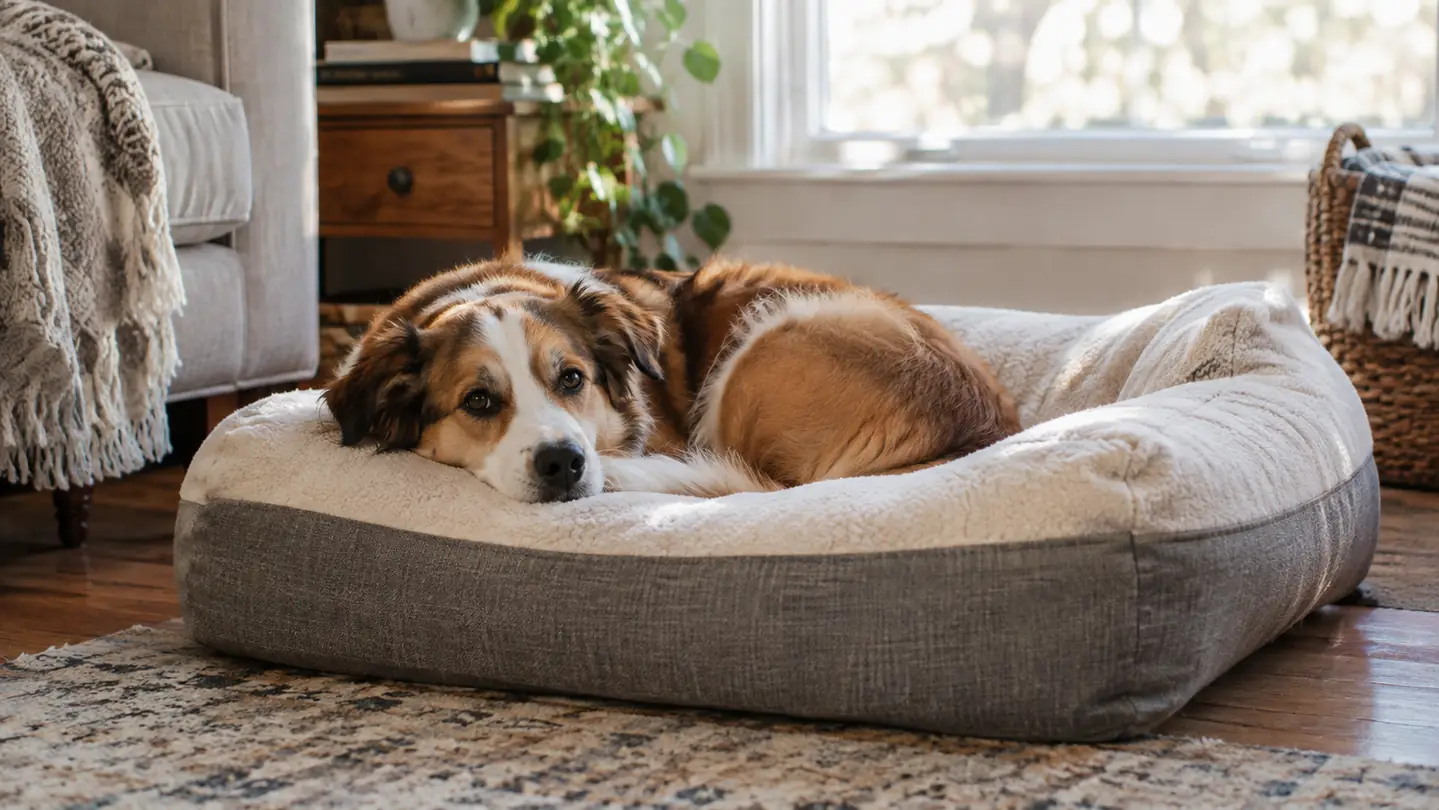
When Bailey came home from the rescue at about 40 pounds, I figured any medium dog bed would do. I figured wrong. The first one I bought was too small, so she hung half off the edge every night. The second was big enough but so thin that she woke up stiff and repositioned herself three times a night. After years as a receptionist at a veterinary clinic, I had watched enough dogs with joint trouble to know that bed size is not a minor detail. It is the difference between a dog that sleeps through the night and one that spends the night shifting around. It is the difference between a dog that hops off the bed ready for a walk and one that gets up stiff and slow. The Bedsure orthopedic bed ended up being the one we kept, but only after I learned to match the size to the dog instead of guessing.
Here is the part nobody puts on the package: size charts only get you partway there. A 45-pound dog like Bailey fits a medium in one brand and a large in another. The same dog can be a medium on Monday and a large on Tuesday depending on how the company measures. The right size depends on three things: how your dog measures from nose to tail, how they sleep at night, and where the bed is going to live. These five steps take about ten minutes and a soft tape measure, and they will save you from buying the same bed twice.
Start with the bed that fits a 45-pound dog
The Bedsure Orthopedic Dog Bed in medium is the one that finally worked for Bailey, and it is the first bed I recommend to friends with dogs in the 30 to 50 pound range. Compare the size chart against your own dog's measurements before you order.
Amazon Check Today's Price on Amazon →Step 1: Measure Your Dog From Nose to Tail
Grab a soft tape measure, the kind you would use for sewing, and have your dog stand on all fours. If your dog will not hold still, have someone hold a treat at nose level while you measure. Run the tape from the tip of the nose to the base of the tail, where the tail meets the body. Do not include the tail itself, and do not measure to the end of the fur. Bailey measures about 27 inches that way, which puts her right at the edge of medium and large on most charts.
Add 6 to 10 inches to that number. That extra room is what lets a dog stretch out flat when they want to, which most dogs do at least a few times a night. A bed that is exactly the length of your dog looks fine in the photo and fails in real life, because the moment they stretch, half their body is on the floor. I learned this with Bailey on the second bed, the one that was technically big enough and practically too small.
If your dog lands between sizes, go up. The downside of a slightly large bed is almost nothing. The downside of a small bed is a dog that sleeps with their head on the floor or their legs hanging off the edge. Over years, that is exactly the kind of pressure that makes joints ache.
Step 2: Watch How Your Dog Actually Sleeps
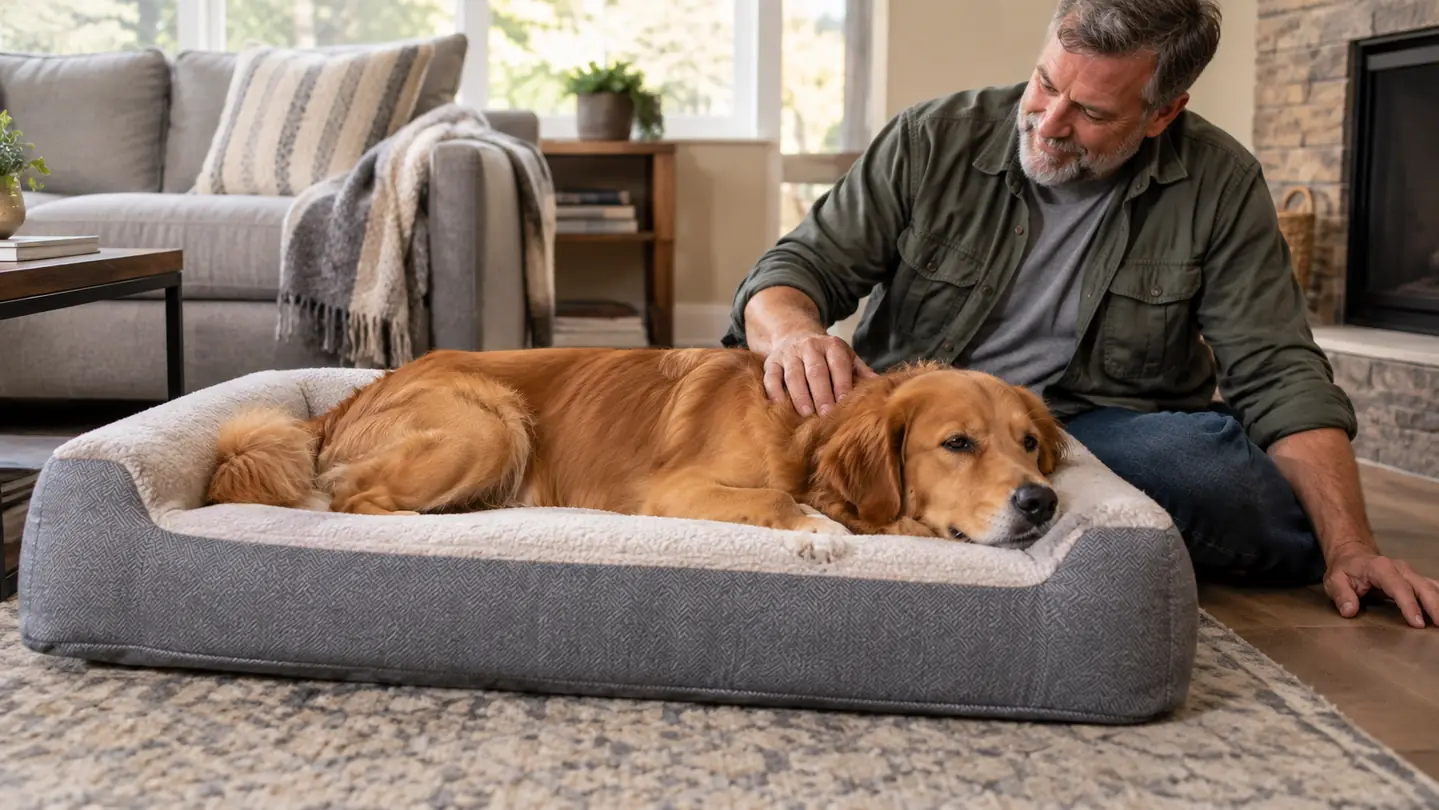
Some dogs sleep in a tight curl all night, and others sprawl out like they own the room. Bailey does both, depending on the season. In winter she curls into a ball with her nose tucked under her tail. In summer she stretches out as long as she can on the cool part of the floor. The bed has to fit the sprawl, because that is the position that takes the most room. If you only watch your dog sleep in the winter, you will buy a smaller bed than they need in July.
Curled-up sleepers can get away with a smaller bed, and some of them prefer it, because the raised edge gives them something to rest their head on. Sprawlers need the full nose-to-tail measurement plus the extra inches. If you have watched your dog stretch out flat, add a few more inches than you think you need. When in doubt, look at how much floor your dog covers when they are stretched out. That is the minimum footprint the bed should have.
The shape of the bed matters here too. A rectangular bed gives a sprawler the most room to work with. A round or donut bed is cozy for a curler but useless for a dog that likes to lie flat. We have a round bed that Pepper the cat has claimed, and a rectangular one for Bailey. They do different jobs, and neither would work swapped.
Step 3: Check the Padding, Not Just the Length
A bed can be the right length and still be the wrong bed if the padding is too thin. Look for a mattress section at least 3 to 4 inches thick. The Bedsure medium is built around a supportive foam base, which is why it comes up in almost every conversation I have with dog owners. Thin beds that fold up like a blanket do not support a 45-pound dog. They just cushion the floor a little and let the dog sink through to the hard surface underneath.
Here is a quick test: press your hand into the middle of the bed. If you can feel the floor through the padding when you press firmly, it is too thin for a medium dog. You want foam that gives a little and then supports, like a good mattress for a person, not like a camping pad.
Check whether the cover comes off for washing. The Bedsure bed has a washable cover, which matters more than most people realize. With Bailey, the cover comes off every other week at least. A bed you cannot wash will smell like dog in about a month, no matter how much you vacuum it.
Step 4: Measure the Floor Space Before You Order
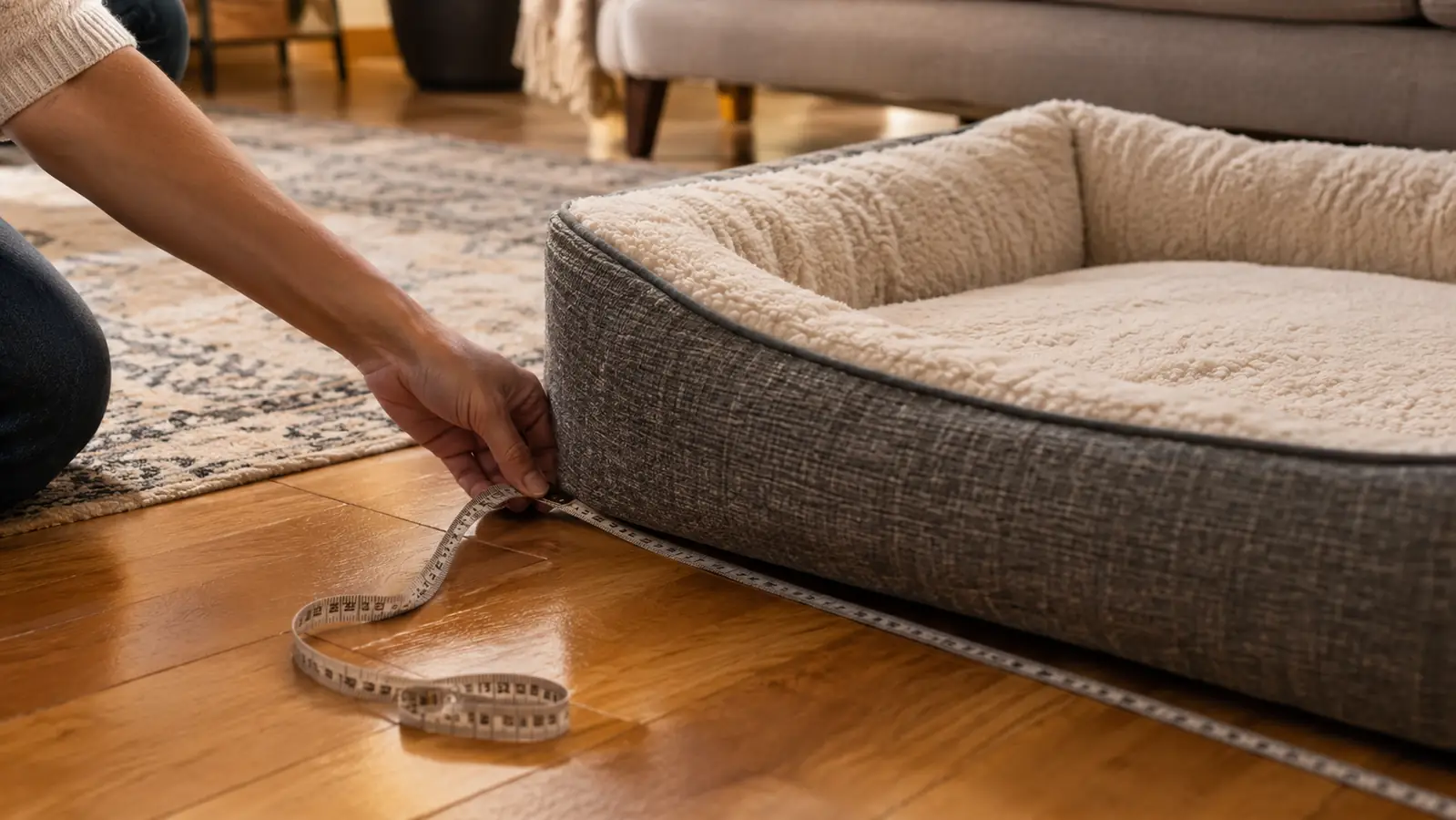
This is the step I skipped the first time. I bought a bed that was perfect for Bailey and then had nowhere to put it that she actually liked. The spot next to the couch was too narrow. The spot in the bedroom was too close to the vent. The corner of the living room was fine for the bed but too far from where the family sat. Measure the spot first, then pick a bed that fits the dog and the room. Write down the width and length of the space so you can compare it to the bed dimensions while you shop online.
Leave a little clearance around the bed so your dog can walk around it and climb on and off without bumping walls or furniture. A dog that has to squeeze into their bed will decide to sleep somewhere else, usually in the middle of your bed or on the rug.
If you have a senior dog or a dog with joint stiffness, put the bed in a spot they already like to sleep instead of trying to move them somewhere new. That was the piece of advice I gave most often when I worked at the clinic. It sounds too simple to matter, but it saves a lot of frustration. A dog that already naps in a certain corner will use a bed in that corner on day one. A bed in a different room, no matter how comfortable, may sit empty for weeks.
Step 5: Read the Size Chart With Your Numbers in Front of You
Once you have the nose-to-tail measurement, the extra inches, and the floor space, open the product listing and look at the size chart. The Bedsure orthopedic bed in medium is 28 inches long, which is the size that worked for Bailey even though she measures 27 inches nose to tail. It works because she curls for part of the night and stretches out on the diagonal for the rest.
A bed does not have to be longer than your dog in every direction. It has to give them a way to lie in their natural positions. If your dog is a committed sprawler who sleeps like a starfish, go up a size and do not second-guess it. A 28-inch bed is the right call for a dog that curls or sleeps diagonal. A full-time sprawler needs the next size up, and that is a normal reason to buy larger than the weight range suggests.
Keep the measurement in your phone. The nose-to-tail length plus a note about how your dog sleeps will make every future bed purchase faster and more accurate, whether you are buying for the living room, the car, or a crate.
What Else Helps
The right size does most of the work, but a few extras made a real difference for Bailey. A washable cover keeps the foam core from absorbing odors and accidents. The Bedsure cover zips off, which sounds like a small thing until you have wrestled a full-size cover into a washing machine by hand. A lightweight blanket over the bed gives her something to burrow under in winter. And a bed on the main floor, where the dog actually spends the day, is more useful than a bed in a quiet corner they never visit.
When the cover comes off, wash it on a gentle cycle with a mild detergent and let it air dry. I ruined one bed cover by putting it in the dryer, and I do not want anyone else to make that mistake. The foam core itself should never go in the machine.
If your dog is older or has early joint stiffness, place the bed somewhere warm and out of drafts. A little warmth goes a long way for sore joints. It is not a replacement for veterinary care, but it is a comfort that costs nothing extra.
A bed that is exactly the length of your dog looks fine in the photo and fails in real life, because the moment they stretch, half their body is on the floor.
The Bottom Line
Bailey has slept on the same Bedsure bed for over a year now, and it still holds its shape. That is the real test of a dog bed, not how it looks on day one but how it looks after a year of a 45-pound dog climbing on and off it. Measure your dog, watch how they sleep, check your floor space, and buy the size that fits all three. It takes ten minutes, and it saves you from buying the same bed twice.
If you are still deciding between sizes, the medium is the safer choice for most dogs in the 30 to 50 pound range, especially if they curl up at night. If your dog sprawls, go larger. Either way, measure first. Your dog will thank you by actually sleeping on the bed you bought.
A bed that fits is a bed they will use
The Bedsure Orthopedic Dog Bed in medium fits dogs like Bailey, and the size chart is easy to check against your own dog's measurements. See today's price on Amazon before you decide.
Amazon Check Today's Price on Amazon →