
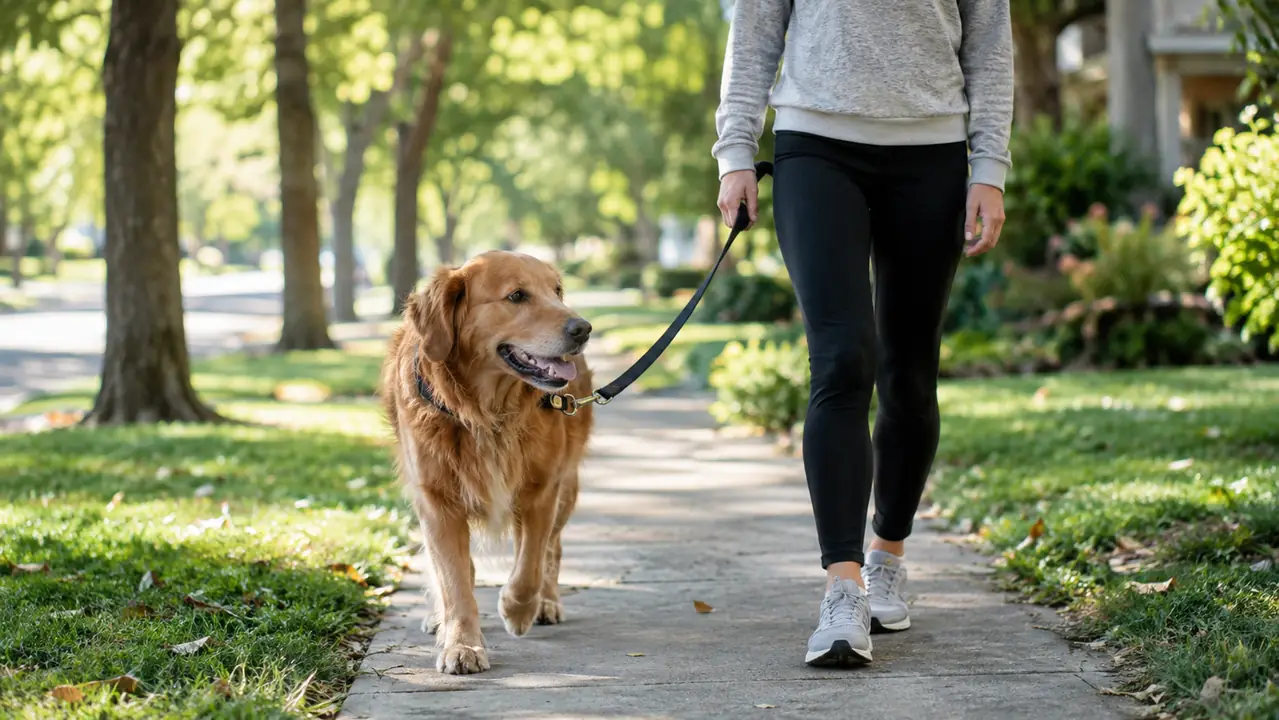
Every walk with Bailey used to start the same way: I would clip the leash to her collar, open the front door, and brace myself. She is a 45 lb rescue with a lot of energy and no patience for standing still, and for the first few months after she came home, a walk meant being dragged down the sidewalk while she lunged at squirrels, leaves, and anything else that moved. My shoulder ached. I tried a back-clip harness, hoping it would help, and it only gave her something more comfortable to pull against. Then I ordered the PetSafe Easy Walk, the front-clip harness that clients at the vet clinic where I used to work kept mentioning.
I am a former veterinary clinic receptionist, so I know better than to expect any piece of gear to do the training for you. But I also knew that the right tool can make training possible, and the Easy Walk turned out to be that tool for us. The short version is that I stopped dreading the front door, and Bailey did too, in her own way. She still gets excited when the leash comes out, but the walk itself is calm now. This review covers the months since that first walk, the good, the annoying, and the parts that genuinely surprised me.
The Quick Verdict
The front clip really does stop most pulling, but the fit takes patience and it is not the right harness for every dog. For Bailey, it turned walks from something I dreaded into something I actually look forward to.
Amazon Check Today's Price →The front-clip harness that finally made my rescue dog walk on a loose leash
After months of daily use, the PetSafe Easy Walk still earns its spot on our hook by the door. With more than 49,000 ratings on Amazon and a front clip that steers instead of fights, it is the first thing I recommend to owners of pullers.
Amazon Check Today's Price on Amazon →How I've Used It
Bailey came to us at about two years old, a mixed-breed rescue with a herding dog's brain and a sprinter's body. She is 45 lbs on a good day, strong for her size, and she had clearly never learned what a loose leash meant. On our first walk together I counted how many times she pulled me off balance: nine times in twenty minutes. I was not going to keep doing that, and I was not going to make her wear a choke chain or a prong collar to fix it.
I have used the Easy Walk on nearly every walk for about four months now, which adds up to several hundred miles and more squirrel detours than I can count. The Medium size fits her well, and the first adjustment took me about ten minutes. Then came a few days of small tweaks as the straps settled, and once I got the chest strap sitting in the right spot, I stopped thinking about the harness entirely. That is exactly what I wanted from it.
I have washed it twice, once after a muddy trail day and once after Bailey rolled in something I will not describe here. It came out of the machine looking and fitting the same as it did new. That matters in my house, because Bailey is hard on gear. She has destroyed two fabric collars and chewed through the strap on a back-clip harness, and the Easy Walk has survived her so far without a loose thread.
Why the Front Clip Makes the Difference
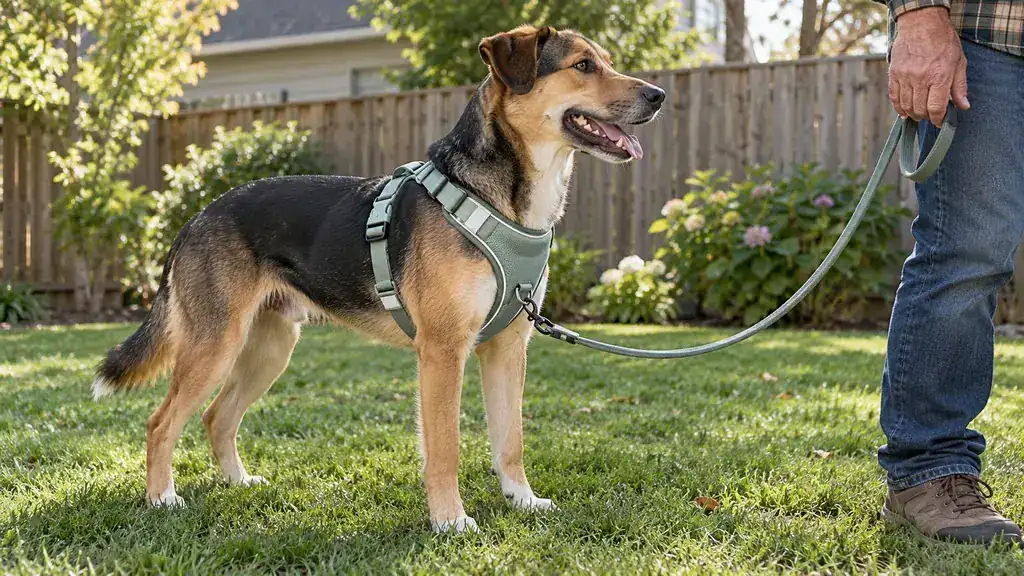
The idea behind the Easy Walk is simple, and it is the opposite of what most people try first. A back-clip harness clips behind the dog's shoulders, so when the dog pulls, the harness pulls the dog forward. That is basically an invitation to keep pulling. The Easy Walk clips at the front of the dog, at the chest, so when Bailey hits the end of the leash, her own momentum turns her front end toward me instead of away from me.
The harness has two straps that work together. One sits across the chest, just above the front legs, and the other loops behind the ribs. Together they create a gentle hug rather than a squeeze. When Bailey hits the end of the leash now, she does not gag or cough the way she did with a collar. She just turns, looks at me, and slows down. It is a redirect, not a correction, and for a dog who does not respond well to harsh handling, that made all the difference.
There is a reason front-clip harnesses are the standard recommendation at the clinic where I used to work. They are not a training substitute, but they give you a chance to actually teach loose-leash walking instead of spending the whole walk fighting. The PetSafe Easy Walk is not the only front-clip harness on the market, but it is the one I keep reaching for, because it is simple, comfortable, and it does not rely on fear or pain to get results.
Four months in, Bailey walks on a loose leash most days, and that is a sentence I honestly never expected to write about her.
The Fit Process: What Nobody Tells You
The most common complaint I hear about the Easy Walk, and the one I almost believed myself, is that it does not fit right. The truth is that it fits differently than any harness you have used before, and it needs more attention on day one than a back-clip harness. The chest strap has to sit low, right across the breastbone, not up under the armpits. If it rides too high, it rubs, and your dog will hate it.
The instructions that come with the harness are decent, but here is the part I had to learn by trial and error. The front clip should sit at the center of the chest, not off to one side. The loop behind the ribs should be snug enough that you can fit two fingers flat underneath, and the chest strap should be snug enough that it does not slide down when the dog walks. Give yourself a few short walks to get it right, and check the fit again after the first week, because the straps settle.
I also learned that the Easy Walk works best when the leash is attached to the front clip only. Attaching it to both the front and the back clip gives you more control, but it also gives the dog something to pull against, and it can twist the harness. For most dogs, the front clip alone is enough, and it is the setup I recommend to everyone who asks. If your dog pulls hard enough to bend the front D-ring, you probably need a head halter and a trainer, and that is a different conversation.
One more thing about sizing: measure your dog before you order. The Medium size suits Bailey's 45 lb frame well, with room to adjust in both directions. If your dog is between sizes, I would size up, because a slightly loose harness is easier to snug down than one that is too small to fasten at all. PetSafe publishes a sizing chart on the product page, and it is worth the two minutes to check it.
How It Holds Up After Months of Use
Durability is the reason I chose this harness over a cheaper no-name option, and so far it has paid off. The webbing is thick, the stitching is clean, and the buckles still click with the same firm snap they had on day one. Bailey is a puller, a roller, and a dog who has tried to rub the harness off on the porch steps. After four months of daily use, there is no fraying and no loose thread.
The one part I watch is the front D-ring, because that is where all the pulling force lands. On the Easy Walk, it is a solid metal ring with a welded seam, and it has held up to Bailey's hardest lunges without bending. The plastic buckles have also surprised me. I expected them to be the weak point, but they are holding up better than the metal buckles on a harness we used before, which rusted after a few washes.
Washing is simple. I take the harness off, close the buckles so nothing tangles, and put it in a laundry bag on a gentle cycle with cold water. I hang it to dry, never put it in the dryer, and it comes out clean and looking close to new. If you walk a dog who finds every puddle, this matters more than you think, because a harness you cannot clean is a harness you will stop using.
The leash clip that comes with most leashes works fine with the front D-ring, but I did switch to a carabiner-style leash clip because it makes one-handed changes easier when Bailey is excited at the door. That is a preference, not a necessity, and the harness has worked with every standard leash clip we own. After all these months, the D-ring shows no sign of wearing thin.
Where It Falls Short
I am not going to tell you this harness is perfect, because it is not. The biggest issue is fit sensitivity. If the chest strap rides up into the armpits, it can rub the skin raw, and I have seen dogs develop sores from a front-clip harness that was fitted wrong. That is user error, but it is an easy error to make, and it is the first thing I check when someone tells me their dog hates the Easy Walk.
The second issue is that it is not a solution for every puller. Dogs that lunge with real force, dogs that slip out of harnesses, and dogs with breathing problems may all need something different. The chest strap crosses the sternum, so I would not use it on a brachycephalic dog without asking a vet first. It is also not crash-tested for the car, so it is not a seat belt substitute, and I have seen people assume it is.
It also takes more setup than a harness you just buckle on and go, and the front clip can catch on tall grass when the leash drags, which has happened to us twice. None of these are dealbreakers for us, but they are real, and they are the reason I would not hand this harness to every dog owner without a conversation first. For the right dog, though, it is the difference between dreading walks and looking forward to them.
The Easy Walk is also overkill for a dog that already walks politely on a loose leash. If your dog never pulls, a simple back-clip harness is lighter and easier to put on. The Easy Walk adds straps and adjustment points that a calm dog simply does not need, and more straps means more places for dirt, mud, and the occasional burr to collect. And in every case, it is a management tool, not a fix. Bailey walks beautifully on a loose leash with this harness on, and she still needs reminders when she is overexcited. That is normal. No harness replaces consistency, and anyone who tells you otherwise is selling something.
What I Liked
- The front clip redirects pulling instead of fighting it, which made loose-leash walking possible for Bailey
- Soft straps with no gagging or coughing, even when she hits the end of the leash
- Thick webbing, a welded front D-ring, and buckles that still work after months of daily use
- Machine washable and quick to dry
- Huge number of owner reviews to read before you buy, which makes sizing easier
Where It Falls Short
- Fit is picky; the chest strap has to sit exactly right or it can rub
- Not for hard lungers or dogs that need a head halter instead
- Not crash-tested, so it is not a car restraint
- The front clip can snag on tall grass when the leash drags
Who This Is For
The Easy Walk is for the owner of a dog who pulls on the leash and who wants a tool that works right away while they train the behavior out. It is for medium and large dogs in the 25 to 75 lb range, for rescue dogs who came with no leash manners, and for people who want something gentler than a choke chain or a prong collar. If you walk your dog every day and you are tired of dreading it, the PetSafe Easy Walk is the harness I would start with. The sweet spot is an energetic medium dog like Bailey who needs help learning that pulling does not get her where she wants to go. If that sounds like your dog, this harness is worth trying before you spend money on a trainer for leash manners alone.
Who Should Skip It
Skip the Easy Walk if your dog has a breathing condition, a brachycephalic face, or a history of shoulder or neck injuries, and talk to your vet before you buy anything. Skip it if your dog lunges with enough force to bend hardware, because you likely need a head halter and a trainer. Skip it if you want one harness that does everything, because this is not a car restraint and it is not a hiking harness with a handle. And skip it if you are not willing to spend ten minutes getting the fit right, because a front-clip harness that fits wrong is worse than no harness at all. And if you have a puppy under six months, check with your vet before using any anti-pull harness, because their bodies are still growing and the right foundation matters more than the right gadget.
Give your shoulder a break and your dog a better walk
Four months in, I still recommend the PetSafe Easy Walk to every owner of a puller who asks. Check today's price on Amazon, read the recent reviews, and give the fit the ten minutes it deserves. Your walks will thank you.
Amazon Check Today's Price on Amazon →