
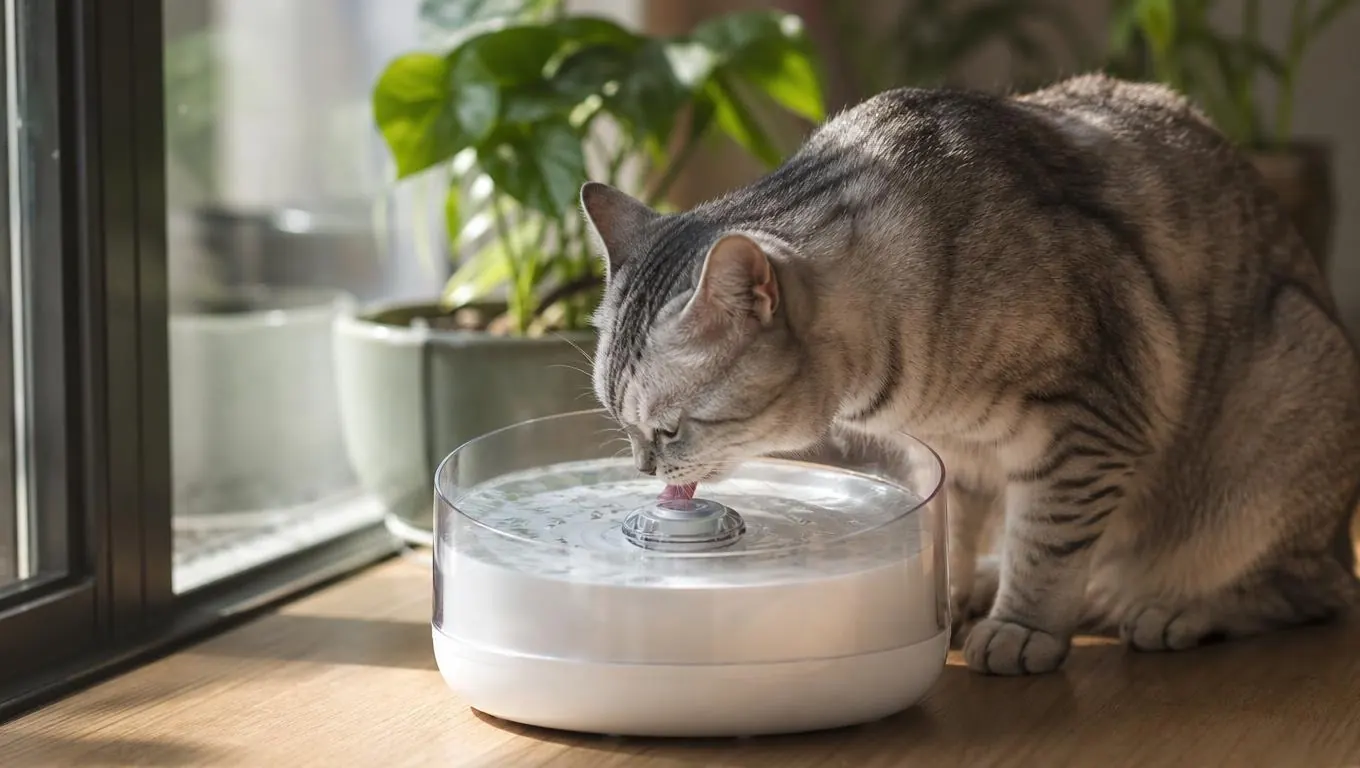
My cat Pepper has never been much of a drinker. She is 9 years old, short-haired, and perfectly happy to ignore her water bowl for most of the day. I spent years as a veterinary clinic receptionist, so I know exactly where that road leads: concentrated urine, a higher risk of crystals, and a cat that is already in trouble by the time you notice anything wrong. I tried wide bowls, tall bowls, glass bowls, and moving the bowl to a different room. Nothing made her drink more. Then I brought home a Veken cat water fountain, and within a week I could see the difference in the water level alone.
This guide is the exact process I used, in the exact order. If you have a cat that drinks too little, you do not need a dozen gadgets. You need a fountain, a smart spot for it, and a cleaning routine you will actually keep. Here are the five steps.
The Fountain That Finally Got My Cat Drinking
Pepper ignored bowls for years. The Veken fountain changed her habits within days, and it costs less than most single vet visits.
Amazon Check Today's Price on Amazon →Step 1: Pick a Fountain With a Pump You Can Actually Clean
The first fountain I tried, years ago, was the cheapest one I could find online, and it was quiet for about two weeks. Then the pump got gummed up, the motor started whining, and the cat refused to go near it. I remember the exact day I gave up on it: a Tuesday in March, when I came home from work and found Pepper had knocked the whole thing over and water was everywhere. That is the real reason most cat fountains fail: not the cat, but the maintenance. When the filter clogs and the pump gets slimy, the water tastes stale and the noise changes. Cats notice both.
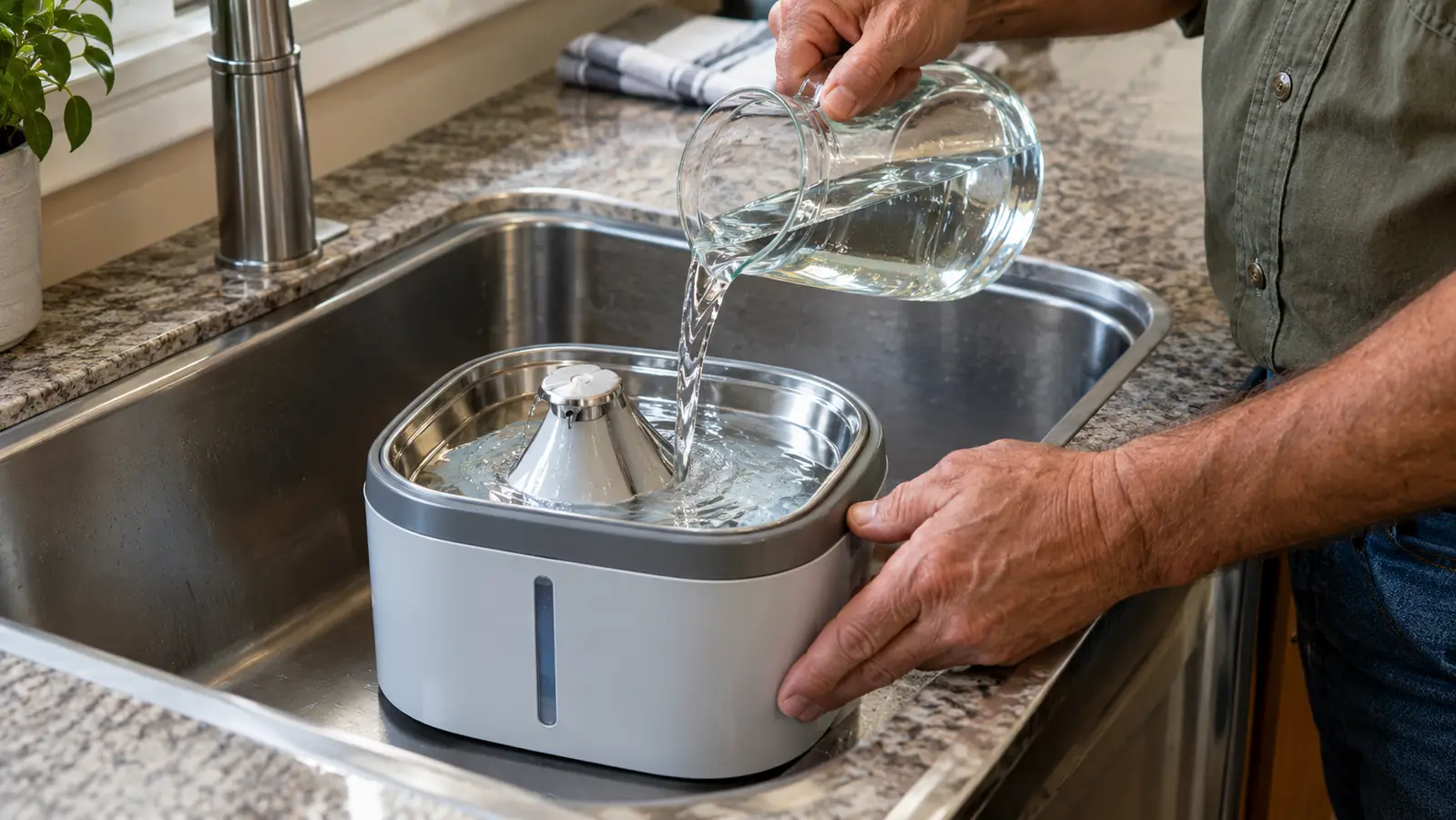
The Veken fountain has a 95-ounce capacity, which sounds like overkill for one cat until you realize you are not refilling it twice a day. The pump sits in a compartment that opens easily, and the whole top half comes apart without tools. I can rinse every piece in the sink in about two minutes. That matters, because a fountain you dread cleaning is a fountain that stops getting used. When I did the first full teardown, I timed it: unplug, empty, four pieces apart, rinse, reassemble, refill. Two minutes and eleven seconds, and that included wiping down the counter afterward.
When you shop, look for three things: a pump that disassembles, a reservoir you can see through so you know when it is low, and a filter that is easy to replace. The Veken checks all three. The filter is a standard size, so I order a pack of six and swap them every three to four weeks without thinking about it. That is why it is the one I recommend to friends instead of the fancier models with lights and phone apps.
Step 2: Place It Where the Cat Already Feels Safe
Location matters more than any feature on the fountain. Cats are exposed when they drink, because their head is down and their back is to the room. If the bowl sits in a high-traffic hallway or next to the dog's food, your cat will take quick, nervous sips and move on. That is not real hydration. I learned this the hard way with a hallway bowl that collected dust more than it collected Pepper.
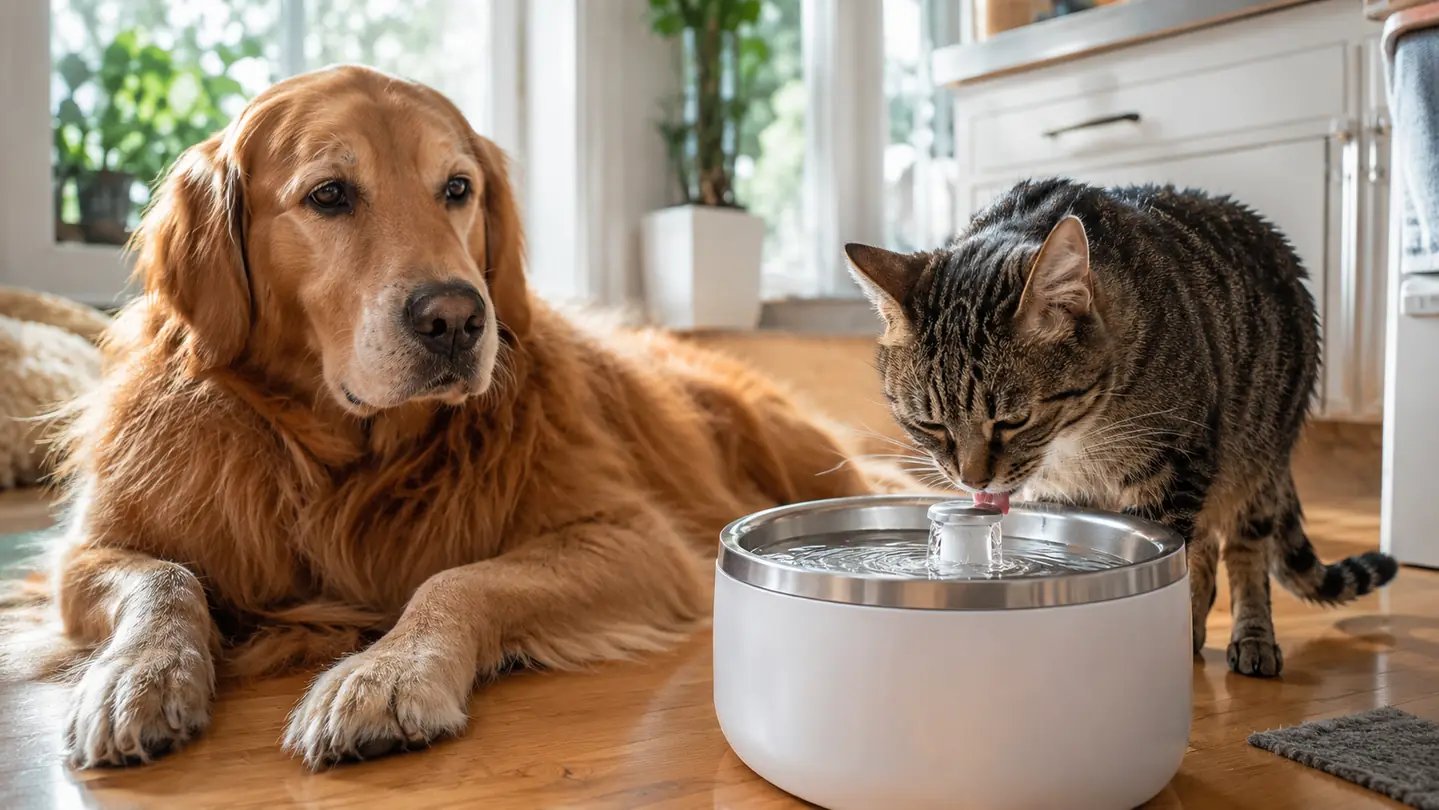
I put Pepper's Veken fountain in a corner of the kitchen, about four feet from the back door, with her back to the wall and a clear view of the room. It sits on a low stool, about a foot off the floor, which is a trick I learned from a vet I used to work with: some cats prefer to drink at chest height, and it keeps the dog's nose out of the water. Bailey, our 45-pound rescue dog, knows to give that corner a wide berth. I did not get there on the first try. I started with the fountain on the floor where her old bowl had been, under the dining room window, and she ignored it for two full days. Moving it those few feet into the kitchen corner was what turned it around.
Do not put the fountain right next to the litter box, no matter how convenient it seems. Cats do not want to drink where they eliminate. Keep food and water separated too. Pepper's bowls used to sit side by side, and she would take two sips and walk away. Now the food dish is on the opposite side of the kitchen, and she lingers at the fountain instead of rushing through. If you have more than one cat, place fountains in two different rooms so no cat has to wait or guard.
Step 3: Run It Quietly for a Day Before You Expect Anything
Cats are suspicious of new things that move and make noise. The first time I plugged in the Veken, Pepper watched it from across the room for about ten minutes, then walked over, sniffed the stream, and walked away. I did not panic. I left it running overnight so the sound became background noise. The next morning the water level had not dropped, but she had spent the night on the chair closest to it, which I took as a good sign. She drank from it for the first time on the third night, around 11 PM. I know the time because I was still up reading and heard the little lap, lap, lap coming from the kitchen.
The Veken is genuinely quiet, which helps. I can hear a soft trickle if I stand right next to it, but not from across the kitchen. That matters, because a loud pump will spook a nervous cat and keep you from running the fountain at night, which is when cats do most of their drinking. My old fountain whined loud enough to hear from the bedroom, which is probably why Pepper avoided it after the first week. The Veken has never made that noise, even at the end of a three-week stretch between cleanings.
If your cat will not go near the fountain at first, do not push it. Keep the old water bowl out for a week. Let the cat approach on her own terms. I kept Pepper's bowl out for five days and then moved it to the other side of the kitchen for three more before retiring it. Every cat I have known comes around once they realize the water is fresh and moving. The movement is the whole point: in the wild, cats associate running water with safety and freshness. The day I finally put the old bowl away, Pepper was already drinking from the fountain two or three times a day.
Step 4: Keep a Routine That Matches the Filter Schedule
This is the step that separates people who love their fountain from people who throw it in a closet. You have to clean it on a schedule. I top off the Veken every two days and do a full clean every Sunday morning, the same time I water the houseplants. The full clean takes less than five minutes: unplug, empty, take apart, rinse the pump, scrub the basin with a soft sponge, refill, and plug back in. I once let it go ten days during a busy stretch, and the pump started making a faint grinding sound. Pepper went right back to the bathroom sink, which is her backup water source. One clean later, she was back at the fountain.
I replace the filter every three to four weeks, usually on the first of the month so I do not have to remember. Veken filters are inexpensive and easy to find, and the fountain takes a standard size, so I buy a small stash and keep it in the pantry. If you have hard water, you will see white buildup faster, so plan on cleaning more often. Our water is on the hard side, and I see a light film on the basin by day five. A little bit of unscented dish soap is fine for the plastic parts; just rinse thoroughly so no residue reaches the water.
The reason I stay on top of this is simple: a dirty fountain is worse than no fountain. Stagnant water, biofilm, and a moldy filter will make your cat drink less, not more. If you are not willing to commit to the weekly clean, skip the fountain and just refresh a wide bowl twice a day. But for me, the five-minute Sunday routine is a fair trade for watching Pepper actually drink. I have kept it up for months now, and the only time she has gone back to ignoring water was that one ten-day stretch.
Step 5: Track Water Intake in a Way You Can See
You cannot tell a cat to drink more, but you can tell when it is working. I keep a mental baseline of how much I pour into the Veken each morning. When the reservoir drops noticeably overnight, I know Pepper is drinking. When it barely moves, I know I need to check the filter, the noise level, or the placement. For the first month I actually measured: twelve ounces in the morning, and by evening the reservoir was down to about eight. That is a cat who is drinking.
There are also physical signs that are easy to miss. A cat that drinks more tends to produce larger, less concentrated urine clumps in the litter box. Her coat looks less dry. She is less likely to develop constipation. I am not a vet and I do not play one online, but I did spend years handing off urine samples at the clinic, and I know which ones come from dehydrated cats. Pepper's clumps went from small and hard to noticeably bigger and softer within the first three weeks, which is the kind of detail only another cat person would cheer about.
If you want to be more precise, measure the water you put in for a few days, then measure what is left at the same time each evening. A healthy adult cat needs about 3.5 to 4.5 ounces of water per 5 pounds of body weight per day, and that includes moisture from wet food. If your cat eats wet food, the fountain is a supplement, not a replacement. If you feed dry food, the fountain does most of the work.
What Else Helps
The Veken fountain did the heavy lifting, but I stacked a few other habits on top. Pepper gets a little warm water poured over her wet food at dinner, which adds moisture and brings out the smell. I also drop an ice cube in the fountain on hot summer days; the moving water stays cooler and some cats find it interesting. One thing that surprised me: putting a second, smaller bowl of water in the bedroom cut down on her middle-of-the-night trips to the kitchen. She drinks from both now.
If you are worried about electricity, the Veken draws very little, and I have run it 24/7 for months without a noticeable change in the bill. The pump is rated for continuous use, and the fountain holds enough water that I have never come home to a dry basin. For a household with one cat, the 95-ounce reservoir is more than enough. I did the math once, out of curiosity: the whole setup uses about as much power as a nightlight.
The Veken fountain did what no bowl ever did: it got my 9-year-old cat to drink every single day, without me standing over her.
Ready to See If Your Cat Drinks More Too?
The Veken fountain is quiet, easy to clean, and holds enough water that you are not babysitting it daily. Worth a try if your cat has always ignored the bowl.
Amazon Check Today's Price on Amazon →