
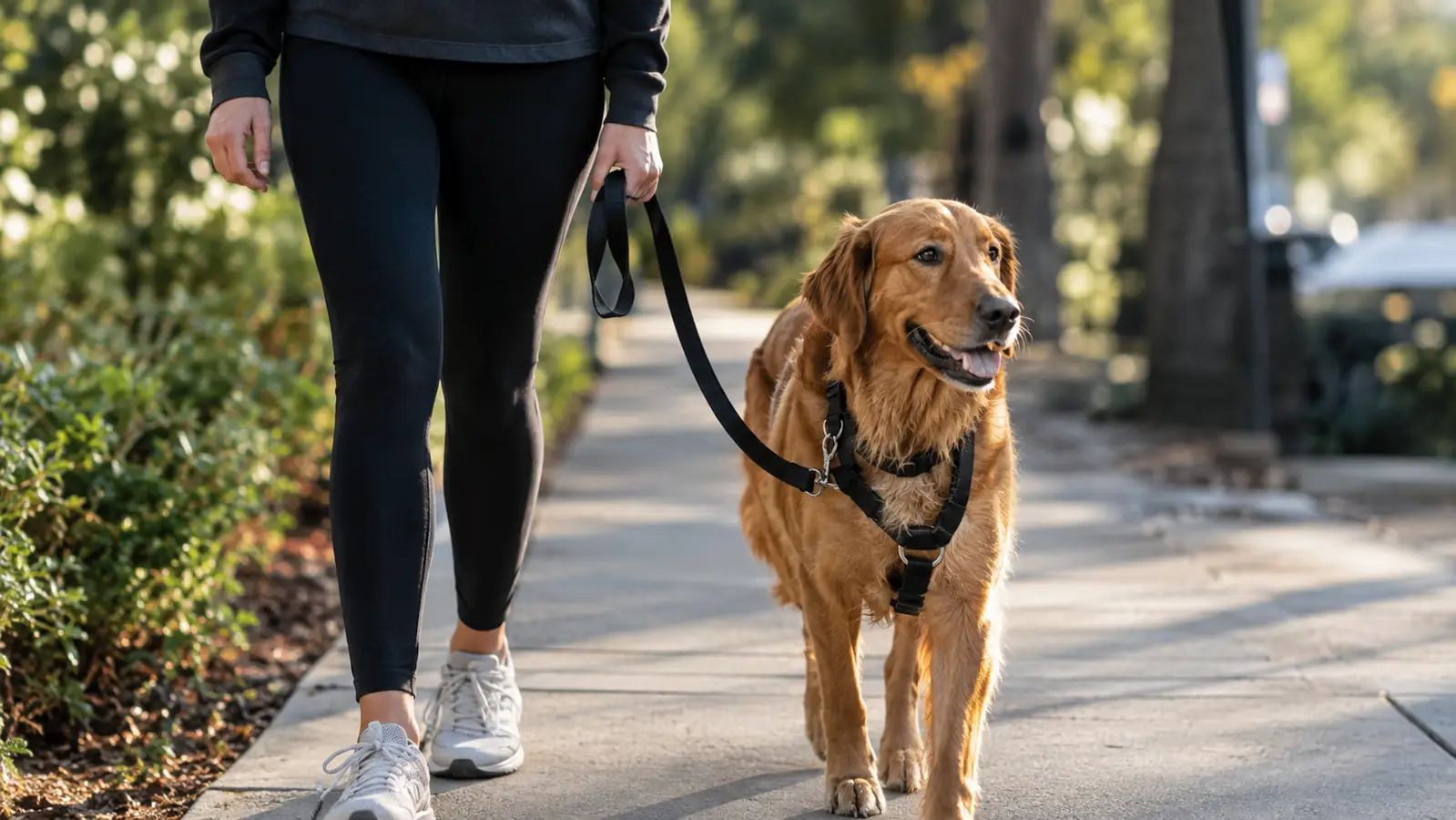
If you have a dog that pulls, you have probably been told to try a harness, a head collar, or a sturdier leash. I tried most of them during my years as a receptionist at a veterinary clinic, and then I tried them again at home with my rescue, Bailey, a mixed breed around 45 pounds who used to walk like her nose was pulling a sled, head down, front legs driving, leash stretched tight the whole way. I started with a flat collar and a six-foot leash, which only let her choke herself. A back-clip harness gave her more leverage, and a head collar worked for about two days before she planted her feet and refused to let it near her face. I even tried a dual-clip leash that attached to both collar and harness, but the setup was fussy and she tripped over the trailing strap. The fix that actually changed our walks was the PetSafe Easy Walk, a front-clip harness. The leash clips at the chest, so when Bailey surges forward, the harness turns her gently back toward me instead of letting her drag me down the road. Here are 10 reasons it works, based on my own testing with the PetSafe Easy Walk and a few other front-clip models.
Stop the Pull Before It Starts
A front-clip harness makes walks calmer from the first block, and the PetSafe Easy Walk is the model I reach for most with Bailey. See today's price on Amazon.
Amazon Check Today's Price on Amazon →It Redirects, Not Restrains
A front-clip harness does not squeeze or choke. When the dog pulls, the clip at the chest shifts their balance just enough that forward motion turns into a slight turn. I saw it happen the first morning I used it. Bailey lunged after a rabbit on the neighbor's lawn, a big cottontail that bolted out from under the hedge, and instead of the leash going taut against her collar, her front end swung gently sideways until she was facing me. She stopped, blinked, and reset. The whole exchange took maybe three seconds. There was no snap, no yank, no correction, just a quiet change of direction. That single moment convinced me the geometry was doing something no collar ever did. Bailey still gets to be excited, but her excitement no longer drags me. That is the whole point: redirect the energy instead of fighting it.
It Puts Less Strain on Their Neck
A collar transfers every jerk straight to the throat. After years of watching dogs cough and gag on collar corrections at the clinic, I will not use one on Bailey for daily walks. A front-clip harness spreads pressure across the chest and shoulders, which matters even more for a dog that has any history of trachea issues.
It Works for Big Pullers and Little Pullers Alike
The same design that helps a 45-pound mix like Bailey also helps a 12-pound terrier that thinks it is a sled dog. Because the clip sits at the center of the chest, the leverage works regardless of size. I have recommended front-clip harnesses to owners of everything from dachshunds to Great Danes, and the principle holds.
You Get More Control on Busy Sidewalks
The front clip gives you a second point of control close to the dog's center of gravity. When a squirrel bolts across the street or another dog appears, you can steady Bailey with far less arm strength. About three weeks in, on a Tuesday morning in October, a deer crossed the road ahead of us at 7:15. Bailey's whole body went tense, she surged, and the harness turned her before she got two steps. She pivoted mid-lunge, front feet skidding on the pavement, and then stood there watching the deer amble into the treeline. I stayed on my feet with one hand on the leash and the other around my coffee mug, which had never happened before. That extra control is what kept me from getting pulled off my feet during her first year home, when she still thought every moving thing was worth chasing.
It Teaches Better Walking Habits
Because the harness makes pulling less rewarding, the dog starts to experiment with walking loosely beside you. Bailey figured out within a couple of weeks that staying close meant the walk kept moving, while pulling meant a gentle pause and a turn. The harness did not train her overnight, but it made good behavior the easier choice.
It Is Easier on Your Shoulders and Back
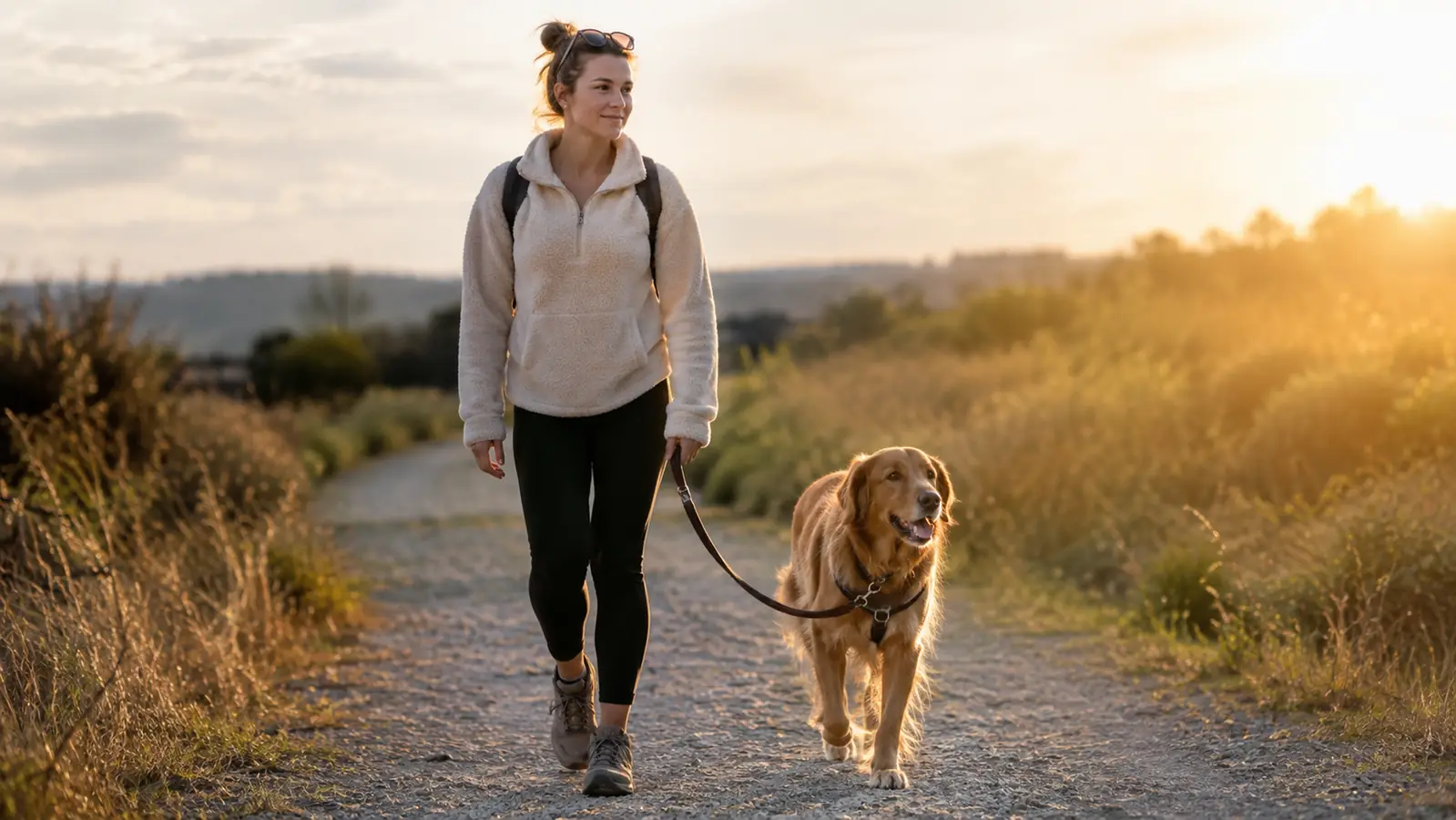
This is the reason I hear from owners more than any other. With a collar or a back-clip harness, a strong pull yanks your arm and twists your shoulder. With a front clip, the pull redirects sideways before it ever reaches your arm. After a few weeks, my morning walks stopped leaving my shoulder tight.
It Works with Positive Training Methods
I am not a fan of tools that punish. A front-clip harness fits with reward-based training because it simply removes the payoff for pulling. You can still use treats, praise, and pauses to reinforce loose-leash walking. The harness just keeps the bad habit from being self-rewarding.
It Is Comfortable Enough for Daily Walks
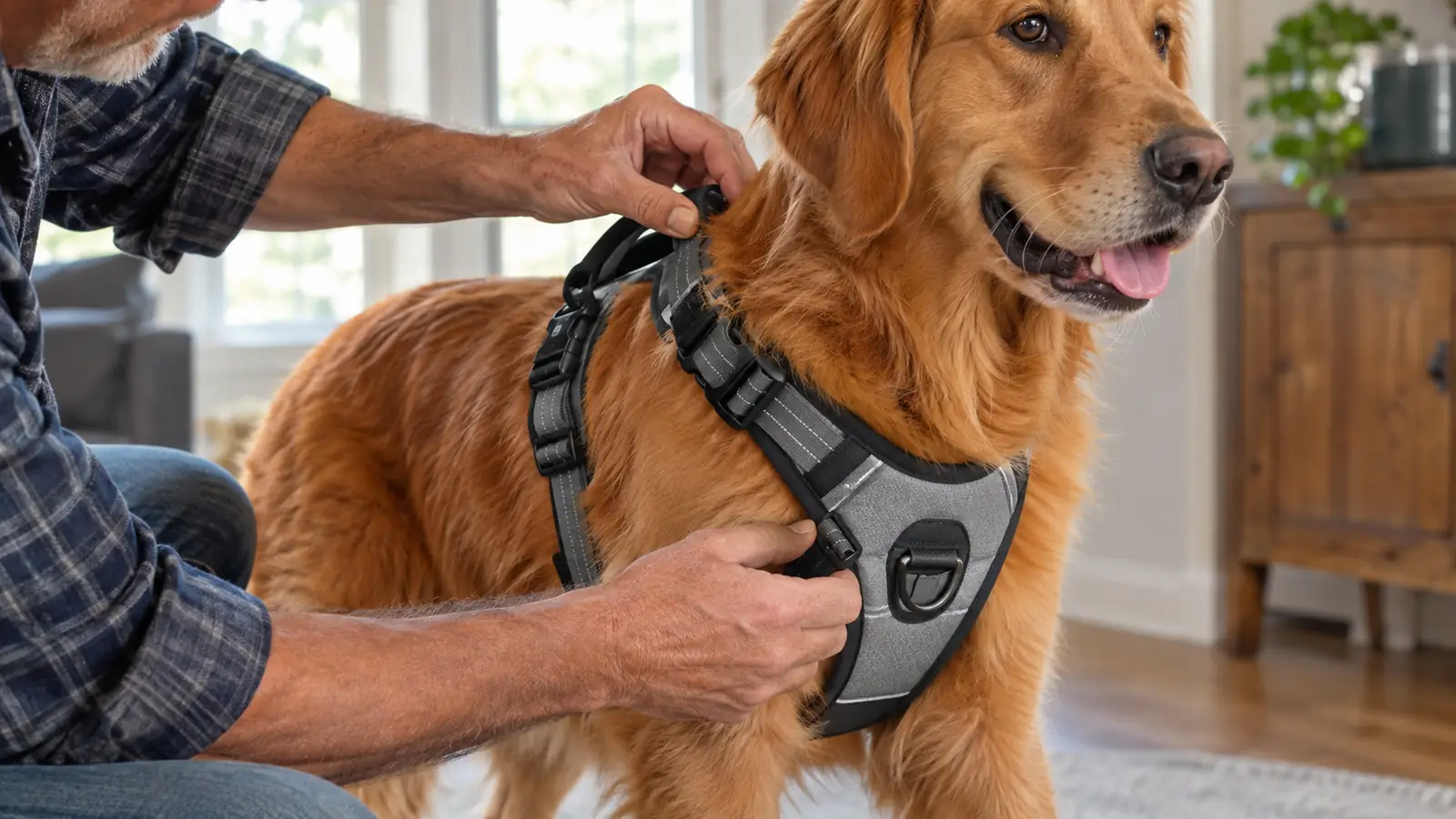
A harness only helps if the dog will actually wear it. Bailey stopped noticing the PetSafe Easy Walk after the first few minutes. The first fitting took me about five minutes in the living room: the chest strap sits high enough to clear her elbows when she trots, and the padding stays away from her armpits, which is the spot that rubs on many cheaper models. The medium fit her 45-pound frame out of the box, which surprised me, since most harnesses run small. We have walked twice a day for months now, 40 minutes on the bike path most mornings and a shorter loop after dinner, and I have not seen a single raw patch. She does not shake it off at the door, she does not stop to scratch at it, and on warm days I can slide a finger under every strap to double-check the fit.
It Prevents Escapes
Some dogs can back out of a collar or a poorly fitted harness. The Easy Walk has a belly strap that sits behind the ribs, so there is no room to wriggle backward out of it. I once watched a foster dog slip a collar in the parking lot at the clinic, and I have been careful about fit ever since.
It Made Walks Fun Again
This is the reason that matters most. Once Bailey stopped spending the whole walk choking herself, she started sniffing, trotting, and actually looking back at me. Walks became the best part of both our days instead of a chore I braced for. If your dog pulls, you deserve that too.
What I'd Skip
I would skip a front-clip harness if your dog has a respiratory condition that makes any chest pressure uncomfortable, or if you are not willing to spend a few minutes adjusting the fit. I would also skip it if you expect a harness to do all the work with zero training on your end. It is a tool, not a magic wand. And if you have a dog that chews through straps, look for the reinforced version, because the standard webbing will not survive a determined chewer.
The first walk with the front clip, Bailey pulled, turned, looked up at me, and for the first time in months, we finished the block without me bracing.
Give a Front-Clip Harness a Try
If your dog pulls, the fix might be simpler than you think. The PetSafe Easy Walk Harness is the one I recommend to friends, and it is a small change that made a big difference here. Check today's price on Amazon.
Amazon Check Today's Price on Amazon →