
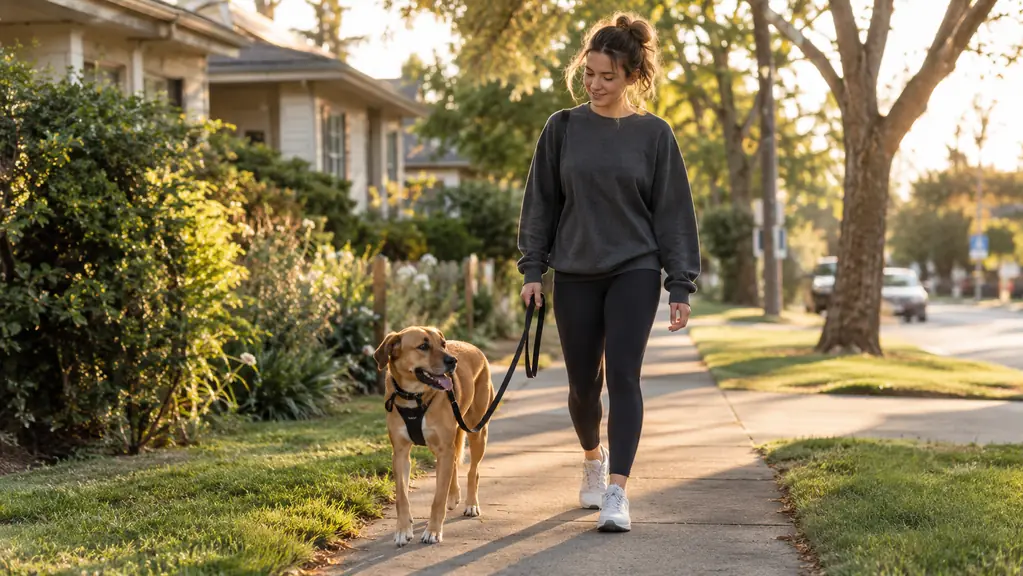
Every walk with Bailey used to start the same way. I would clip the leash to her back-clip harness, open the front door, and brace. She is a 45-pound mixed-breed rescue with a nose that can find a squirrel three blocks away, and the moment she caught a scent she was gone, hauling me down the sidewalk with her front feet barely touching the ground. The back-clip harness gave her all the leverage she needed, because the leash attached right behind her shoulders, which is exactly where a dog's pulling strength lives.
So when I agreed to test the PetSafe Easy Walk against the plain back-clip harness we already owned, I expected to dislike it. A front-clip harness looked like it would tangle the leash and rub her armpits. Six weeks later, the PetSafe Easy Walk is the one we reach for on every walk, and the back-clip harness sits in the drawer. Here is the honest version of how they compare, including the things the Easy Walk does not do well.
| PetSafe Easy Walk | Back-Clip Harness | |
|---|---|---|
| How it stops pulling | Front clip turns the chest toward you; pressure is gentle and brief | Clip sits behind the shoulders, in line with the pull, so it can encourage more pulling |
| Steering | A light tug turns the whole front end, useful when your dog locks onto a squirrel | A tug just straightens the leash; the dog's shoulders stay pointed where it wants to go |
| Comfort on a calm walk | Front strap crosses the chest; some dogs need a week to get used to the feel | No chest pressure; most dogs forget they are wearing it |
| Speed getting it on | Step-in with two buckles; takes practice with a wiggly dog | Over-the-head with one buckle; fastest option in the morning |
| Fit adjustments | Two points of adjustment, front strap sits high behind the shoulders, holds position on walks | Usually a looser fit; can slide and spin around the ribcage |
| Best for | A dog that pulls toward dogs, squirrels, and scents on daily walks | A dog that already walks loose on leash and just needs a place to clip |
How I Tested Both Harnesses
Bailey is six years old, about 45 pounds, and full of energy. She pulls hardest in three situations: when she sees another dog, when she catches a deer trail in the grass, and when we walk past the neighbor's fence where the beagle lives. I used each harness for three full weeks on our normal morning and evening walks, same route, same leash, same treats. I also tested both in the fenced backyard, where I could let her hit the end of the leash safely and watch what her body actually did.
One thing I should say up front: no harness turns a strong dog into a robot. If Bailey plants her feet and lunges at full strength, the PetSafe Easy Walk does not magically stop her. What it does is change the angle of the pressure so that pulling becomes awkward for her, in a gentle way, and she chooses to stop. The back-clip harness never gave her a reason to stop, because pulling felt fine.
Why the Clip Location Matters More Than You Think
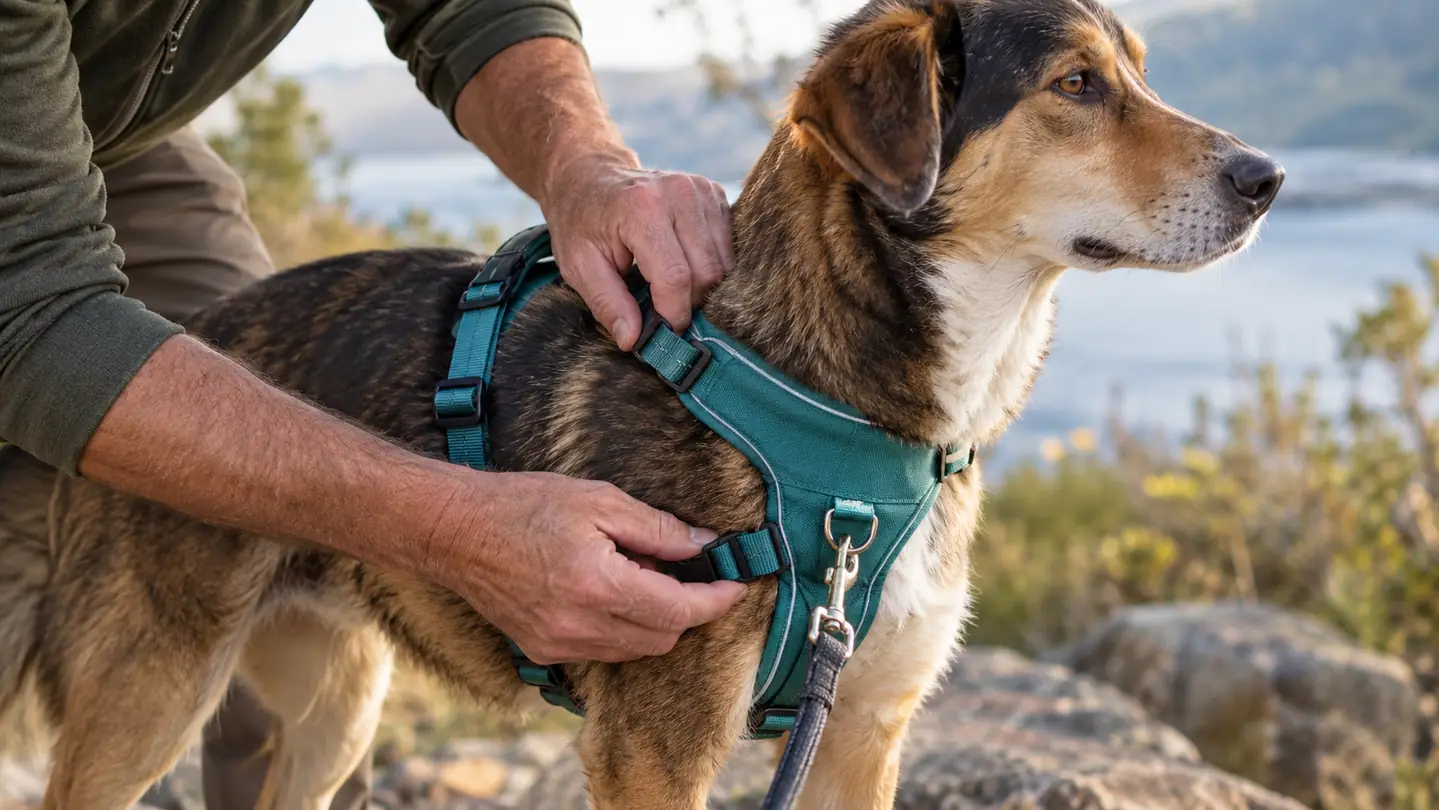
The whole difference between these two harnesses comes down to one thing: where the leash clips. On a back-clip harness, the leash attaches between the dog's shoulder blades. When a dog pulls, that pressure is directly in line with the direction they want to go, so it feels like the harness is helping them. Think of a sled dog. The whole point of sledding gear is to put the pull right behind the shoulders, because that is the most efficient position for a dog to haul weight. A back-clip harness works the same way, which is why it can make a puller worse.
The PetSafe Easy Walk clips at the front, on a strap that sits across the dog's chest. When the dog pulls, the pressure turns the front of the body toward you, so the dog has to correct its own course. It is not a punishment and it does not hurt. It simply makes pulling feel awkward and self-correcting. Within a week, Bailey started slowing down at the end of the driveway instead of charging, because she had learned that charging meant her own chest turned her around.
Where PetSafe Easy Walk Wins
Steering is the biggest win. With the front clip, I can turn Bailey's whole front end with a light tug, which matters when she locks onto a rabbit. On the back-clip harness, a tug just straightens the leash and she keeps her shoulders pointed at the rabbit. The front clip also gave me a way to redirect her before a lunge turned into a full pull. I could feel her weight shift and correct it in the first second instead of the fifth.
Fit is the second win. The PetSafe Easy Walk has two adjustment points, one on each side of the chest strap, plus the girth strap, so I could dial it in until it did not shift when she moved. It sits with the front strap high and snug behind her shoulders, which is the position that gives the steering its leverage. The back-clip harness fit her fine, but looser, and it spun around her ribcage on longer walks. I also liked that the Easy Walk has a loop on the back that tightens gently if a dog tries to back out of it, which is a real concern with a rescue that came to us nervous.
Where a Back-Clip Harness Wins
Speed and ease of getting it on, no contest. The back-clip harness goes over Bailey's head and buckles once on the side, so I can have her ready in about ten seconds. The PetSafe Easy Walk is a step-in design, which means laying it on the floor, having her step in with both front feet, pulling the straps up, and buckling two clips. The first few times it took me a full minute and a wiggly dog. I have learned a routine that gets it done faster, but if you have a dog that hates standing still, the back-clip will win the getting-dressed battle every morning.
Comfort on a relaxed walk goes to the back-clip too. When Bailey is walking loose and calm, she forgets she is wearing the back-clip harness entirely. The Easy Walk's front strap sits across her chest, and some dogs find that pressure odd, especially at first. Bailey did a lot of pausing and foot-shuffling in week one, like she was trying to figure out what was touching her. That faded once she got used to it, but I would not call it invisible the way the back-clip is. If your dog does not pull at all, the front-clip harness is a solution to a problem you do not have.
The back-clip harness never gave her a reason to stop pulling. The front clip gave her a reason to choose a loose leash.
For a puller, the front clip is the fix.
Six weeks in, the PetSafe Easy Walk is the harness we reach for every morning. If your dog drags you toward every scent on the block, the front clip gives you steering a back clip cannot. Measure your dog's chest and see today's price on Amazon.
Amazon Check Today's Price on Amazon →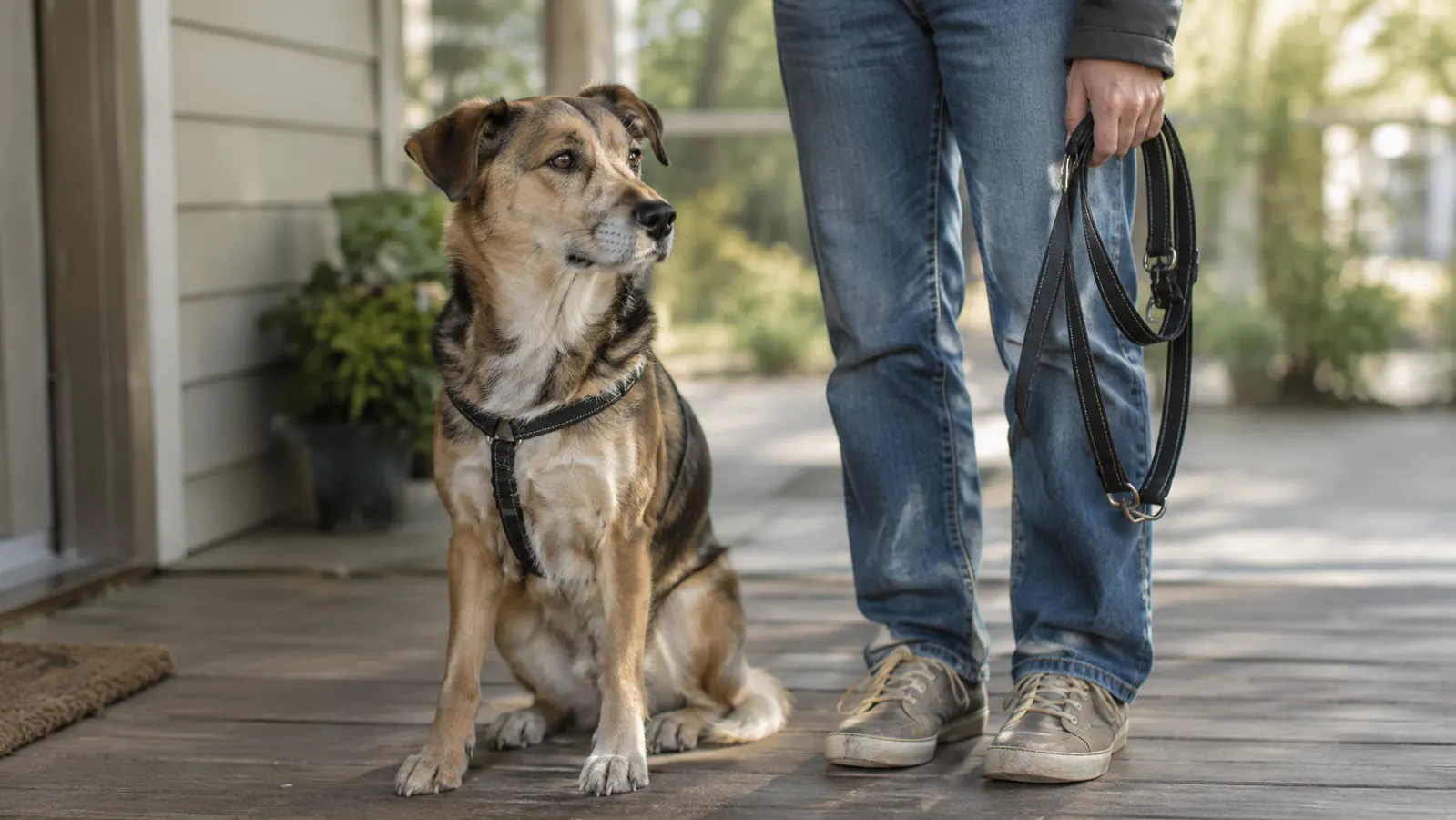
The Everyday Details That Decided It
Over six weeks, a few small things added up. The PetSafe Easy Walk has held up well: the webbing is still stiff, the buckles still click clean, and the front D-ring has not bent even when Bailey hit the end of the leash after a deer. The back-clip harness is also in good shape, though its clip is smaller and I have to hunt for it under her armpit in the dark. I prefer the Easy Walk's larger clip, which sits right on her chest where I can see it.
One honest complaint about the Easy Walk: the leash can slip under her front leg when she turns sharply, and I have to flip it back over the strap. It happens a few times a week, usually when she spins to sniff something behind her. It takes two seconds to fix and it has never caused a tangle, but it is a real quirk that a back-clip harness simply does not have, because the clip sits on top where the leash cannot reach her legs.
The Verdict After Six Weeks
If I had to choose one harness for a dog that pulls, I would choose the PetSafe Easy Walk, and it is not close. The steering alone changed our walks from a daily wrestle into something I actually look forward to. Bailey still gets excited, but now her excitement does not end with me braced against the end of the leash. She pulls less, I correct less, and we both come home in a better mood.
That said, the back-clip harness is not a bad product. It is the right tool for a dog that already walks politely, and it is faster to put on, and it is more comfortable on a relaxed walk. If Bailey were a different dog, one that never lunged at a deer trail, I might still be using it. But she is the dog she is, and the front clip is the harness that works with the dog I actually have.
Three Things to Know Before You Order
First, measure your dog before you order. The Easy Walk comes in sizes, and the medium fits Bailey at 45 pounds with room to adjust on the chest and girth straps. The sizing chart on the listing tells you to measure around the chest, just behind the front legs, and that is the number that matters. Second, the front D-ring will sit lower than you are used to, so your leash will angle down toward her chest, which takes a walk or two to get used to.
Third, give the harness a full week before you judge it. The first two days, Bailey walked like she had forgotten how to move, pausing every few steps to figure out the chest strap. By day five she was trotting normally, and by day seven she was pulling less. If you try it once and decide in one walk, you will miss the adjustment period and probably write off a harness that would have worked.
Who Should Buy Which
Buy the PetSafe Easy Walk if your dog pulls on the leash, even a little. If you find yourself shortening the leash, bracing your feet, or dreading the corner where the other dogs walk, the front clip will give you more control than any collar or back-clip harness. It is also a good choice if your dog is strong enough to drag you, because the steering works at any weight.
Stick with a back-clip harness if your dog walks loose on leash most of the time and you just need a safe place to clip the leash. You will not get the steering, but you will get something easier to put on and less fussy on a calm walk. And if your dog has a sensitive chest or skin issues, the front strap of the Easy Walk may bother them, so talk to your vet before switching.
If you are still deciding, borrow the way I finally decided. I wrote down what I wanted from a walk: to enjoy it, to not brace, to let Bailey sniff without letting her drag me. The Easy Walk is the one that made that list happen. The back-clip harness made walks possible, but the front-clip made them pleasant.
Try the front clip for two weeks and watch what changes.
That is the honest test. Two weeks of morning walks with the PetSafe Easy Walk, then decide. For us, the back-clip harness has been in the drawer ever since. See today's price and the reviews on Amazon.
Amazon Check Today's Price on Amazon →