
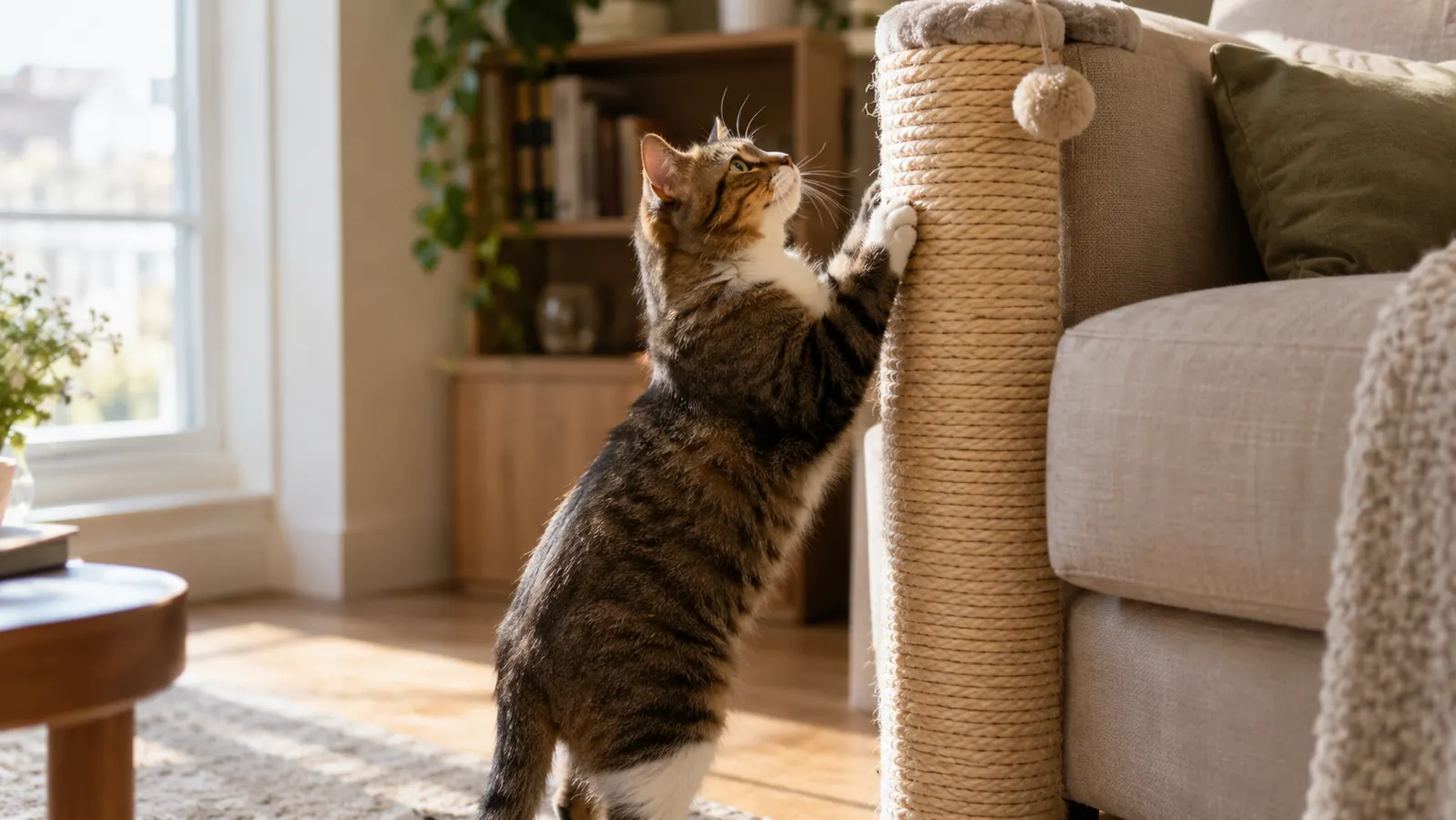
When I still worked at the vet clinic, I lost count of how many owners came in with the same complaint: the cat is shredding the couch. I had the same problem at home with Pepper, my 9-year-old indoor cat, before I switched to the SmartCat Pioneer Pet scratching post. Scratching is not your cat trying to destroy your things. It is how she stretches her back, marks her territory, and keeps her claws healthy. The fix is not to stop the scratching. It is to move it to a place you can both live with, and that takes a post she actually wants to use.
Pepper ruined the corner of our living room couch and took a run at the armchair before I got serious about fixing it. My first attempt was a flimsy cardboard scratcher. She ignored it. Next came a carpeted post, which she used twice and then forgot about. The SmartCat post worked because it is tall, heavy, and wrapped in sisal, which is exactly what a cat like Pepper actually wants. If you are tired of patching upholstery, here is the step-by-step process that worked in our house, in the order it actually happened.
Start With a Post That Can Take the Punishment
The SmartCat Pioneer Pet scratching post stands tall enough for a full stretch and stays put when a cat really leans into it. Check today's price on Amazon, then measure it against your worst spot before you set anything up.
Amazon Check Today's Price on Amazon →Step 1: Choose a Post That Lets Her Stretch Full Length
Cats scratch for three reasons. They scratch to stretch the muscles along their backs, to shed the dull outer layers of their claws, and to leave a visible mark that says this spot is taken. A short cardboard scratcher only handles the claw part. That is why so many cats use them a few times and then go straight back to the couch. The couch gives them something they can really pull against, and it is tall enough for a full-body stretch that feels good from nose to tail. Once she gets that full stretch on the post, she is far less likely to look for it on the furniture.
The SmartCat post is about 32 inches tall, which means Pepper can reach up, dig in, and get that full stretch without the post tipping over. The base is wide and heavy enough that a 9-pound cat throwing her whole weight against it does not move it an inch. That stability matters more than most people realize. If a post wobbles, even a little, many cats will not trust it. They will go right back to the solid arm of the sofa, because the sofa does not wobble.
Material matters too. Sisal is a rough, natural fiber that feels satisfying to a cat's claws in a way that carpet and cardboard do not, and it holds up to daily use. The SmartCat post is wrapped in sisal from top to bottom, so Pepper can scratch high or low depending on how she wants to stretch. A post that only offers one small scratching surface is asking to be ignored, no matter how nice it looks in the catalog.
Step 2: Put the Post Where She Already Scratches
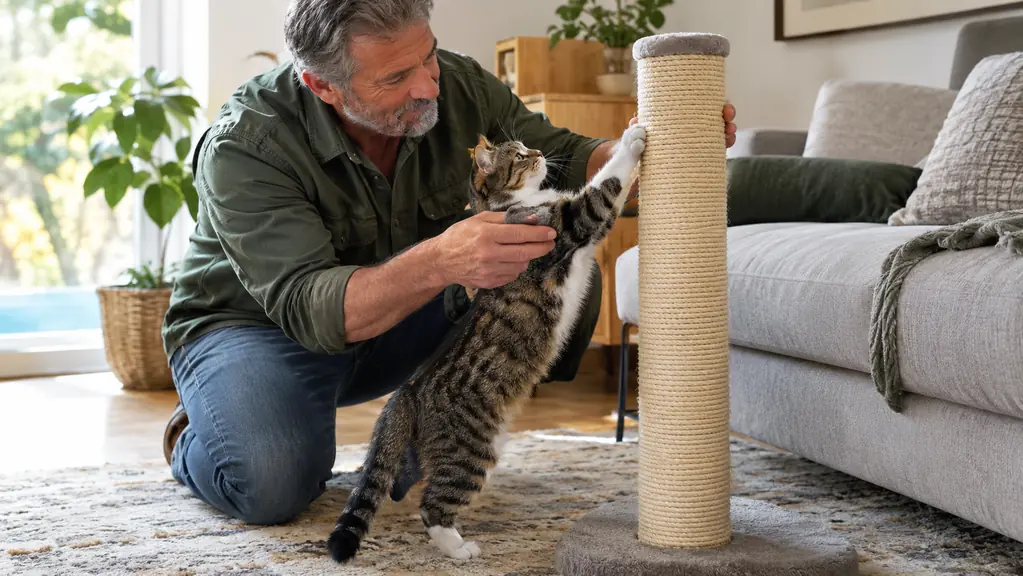
The biggest mistake I made with the first cardboard scratcher was putting it in a corner that looked nice. Pepper did not care about my decorating. She cared about the exact spot where the couch met the wall, because that is where she had already left her mark. Cats scratch where they can see and smell their own work, and a new post in a different room might as well not exist. Location is half the battle, and it is the half most people get wrong. When I finally moved the SmartCat post into that exact corner, Pepper investigated it within an hour.
Set the SmartCat post right in front of the damage for the first couple of weeks. Put it close enough that Pepper has to touch it to reach her old spot. Once she is using it consistently, you can move it a few inches at a time toward a spot that works better for you. Move it slowly, an inch or two every few days, and she will follow. This is the step people skip because it looks odd to have a scratching post in the middle of the room. It is also the step that actually breaks the habit.
While the post is in that temporary spot, do not clean the area with strong-smelling cleaner. Cats use scent to find their scratching spot, and a faint trace of her own smell on the post will help her accept it faster. If you do want to clean the couch, use an enzyme cleaner meant for pet messes and let it dry completely before you put the post nearby. The goal is for the new spot to smell like her and the old spot to smell like nothing.
Step 3: Make the Post the Most Interesting Thing in the Room
A new post is just furniture until the cat decides it is hers. You can speed that up without any tricks. Rub a little catnip into the sisal when you first set it up. Most cats, Pepper included, will roll on it and start scratching within minutes. If your cat does not react to catnip, that is normal, about a third of cats do not. For those cats, a treat placed on the base or a feather toy dangled over the top works just as well. The point is to give her a reason to touch the post on her own.
Reward every visit. When Pepper scratched the post on her own, I gave her a small treat and said her name in a calm voice. When she went for the couch, I did not yell. I just picked her up, carried her to the post, and ran her front paws down the sisal a few times so she could feel how good it was. Within a week, she was going to the post on her own. Cats learn fast when the right behavior is the easiest and most rewarding option in the room.
Try to catch her at the times she usually scratches. Pepper always scratched after her morning meal and again when I got home from work, so those were the moments I made a point of being nearby. A quick play session with a wand toy right before those moments can also burn off the energy that leads to scratching. You are not training a dog. You are setting up a routine that makes the post the obvious choice at the exact moments she would normally head for the couch.
Step 4: Protect the Furniture While You Retrain
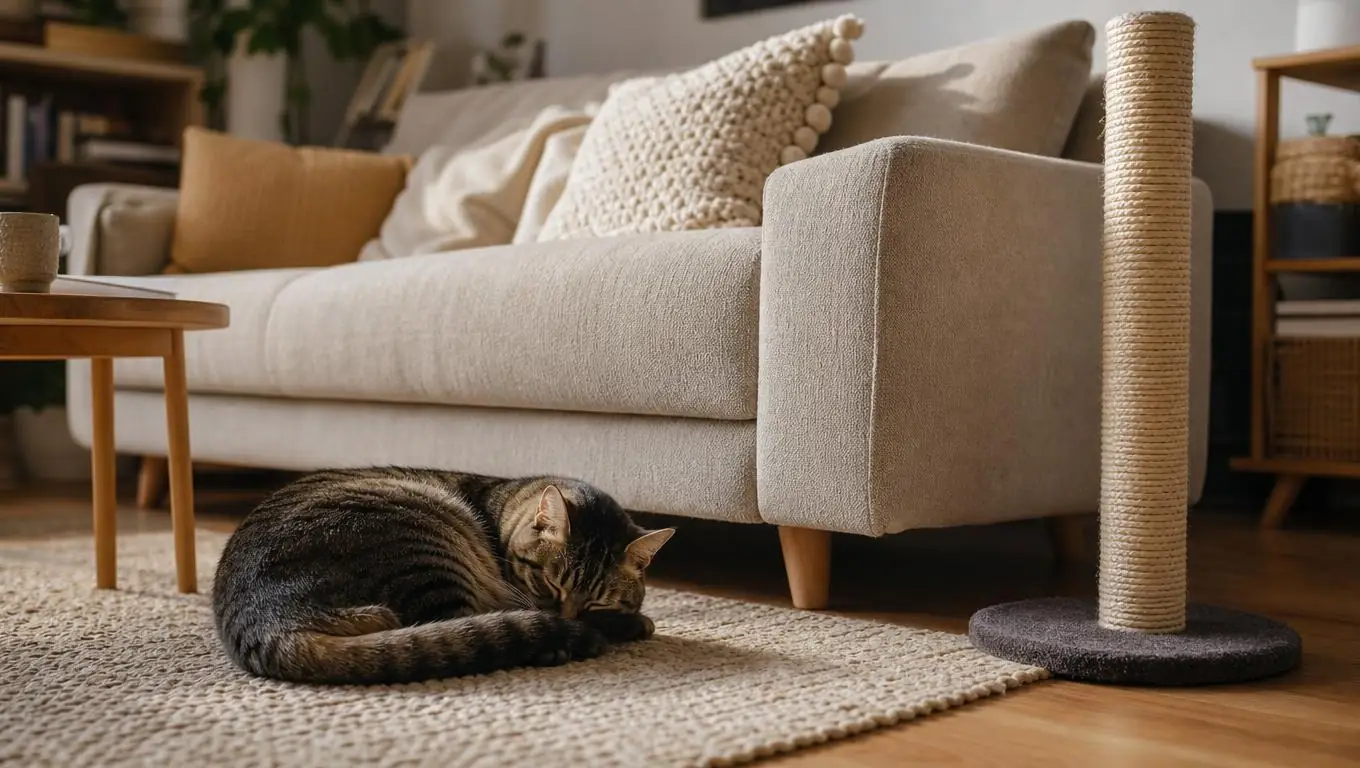
You cannot supervise a cat all day, and habits do not disappear overnight. While Pepper was learning, I covered the damaged corner of the couch with a thick throw blanket and put double-sided tape on the armrest she liked. Cats hate the sticky feeling on their paws, and the blanket removed the texture she was after. After two weeks, neither was needed. The blanket came off, and the tape came off, and she went straight to the post instead of the couch.
Do not use anything that scares her. I know people who swear by motion-sensor spray cans, and they do work, but they can make a cat nervous about the whole room, not just the couch. The goal is for the scratching post to feel like the good choice, not for the couch to feel like a trap. If you make the post attractive and the old spot boring, the cat will do the rest of the work herself. Patience beats punishment every time.
If you have more than one spot she likes, rotate the protection. I kept a second blanket ready for the armchair and moved the tape whenever Pepper showed interest in a new corner. Bailey, our 6-year-old rescue dog, learned to avoid the tape too, which was fine by me. Cats are creatures of habit, but they will test boundaries. Staying one step ahead for a few weeks is easier than retraining a habit that has had months to set in. Think of this phase as the bridge between the old behavior and the new one.
Step 5: Stay Consistent and Give It a Few Weeks
Retraining a cat takes time, and the time varies. Pepper was fully converted in about three weeks. Some cats take closer to two months, especially if they have been scratching the same spot for years. The important thing is to be consistent. Every single time Pepper went for the couch, she got redirected to the post. Every time she used the post, she got praise or a treat. There is no such thing as an occasional exception when you are building a new habit.
Do not get discouraged if she backslides on a busy day. One slip does not undo the work, and cats pick routines back up quickly when the routine is still there waiting for them. If she goes for the couch after a week of good behavior, just redirect her again without making a fuss. The post is still the tall, sturdy, sisal-covered option in the room, and that is what she will choose on a normal day. Consistency is about the pattern, not about being perfect.
Keep the post in good shape too. Sisal does wear down, and a post with shiny, flattened spots is less satisfying to scratch. The SmartCat post has held up well in our house, and when the wrapping eventually needs attention, it can be replaced instead of throwing the whole thing away. A scratching post you have to replace every few months is not a solution, it is a recurring expense. A solid post that lasts is the budget-friendly choice in the long run.
What Else Helps
Trimming Pepper's claws every couple of weeks made a big difference. Shorter claws do less damage when she does scratch, and they seem to catch on the sisal in a way that satisfies her faster. If you have never trimmed a cat's claws, ask your vet or a groomer to show you once. It is a two-minute job once you know how, and it takes most of the danger out of a stray scratch. I did this for years at the clinic, and it is far less stressful than people expect, for both of you.
A few other things helped in our house. A smaller cardboard scratcher in the bedroom gave Pepper a place to scratch without walking all the way to the living room, and it was cheap to replace when it wore out. A tall cat tree gave her somewhere to climb and nap, which cut down on the boredom scratching that happens when a cat has nothing else to do. And keeping her toys rotated meant she always had something to hunt and pounce on besides the couch cushions.
Think about her whole day, not just the scratching. Pepper is an indoor cat, which means every bit of her territory is inside our house. That is why vertical space matters so much. A cat who can climb, perch, and look down on her domain feels more secure and is less likely to scratch out of stress. If your cat seems anxious, a calming diffuser and a consistent daily routine can help too. I would try those before any kind of punishment, because they address the cause instead of the symptom.
One more thing: be honest about what the post is competing with. If your couch is old and already shredded, the cat may keep returning to it because it smells like her and feels familiar. That is exactly why the blanket and tape mattered in the early weeks. Once the old spot stopped being rewarding, the SmartCat post became the obvious choice. It took effort for a few weeks, but the effort is done now, and the couch has been safe ever since.
Within a week, Pepper was scratching the post on her own. After three weeks, I stopped covering the couch.
Give the SmartCat Post a Few Honest Weeks
It took Pepper about three weeks to switch over completely, and the post still looks almost new. If your couch is losing the battle, check today's price on Amazon and start with Step 1 tonight.
Amazon Check Today's Price on Amazon →