
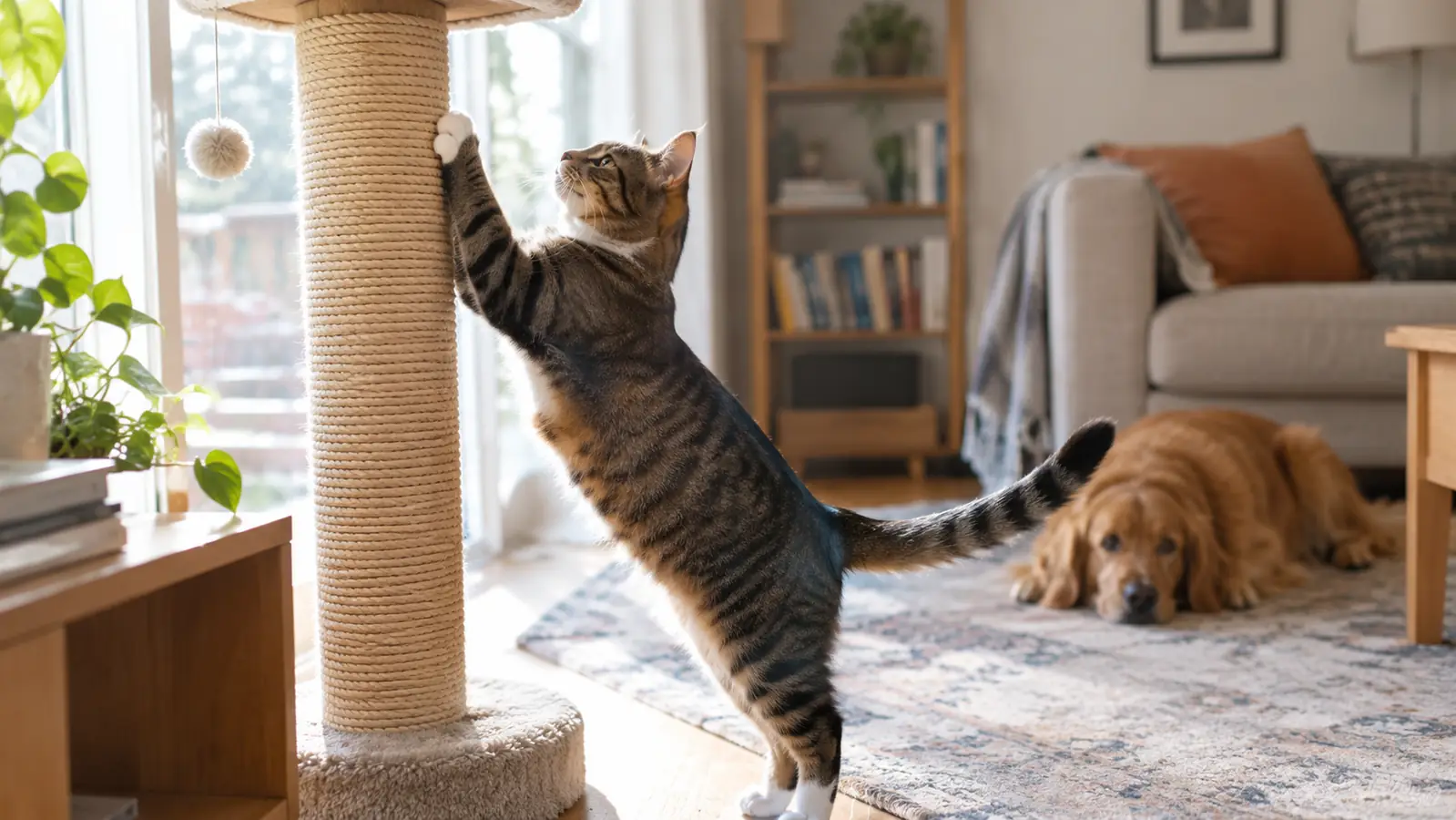
When I ordered a SmartCat scratching post to test against the cardboard scratcher Pepper had been ignoring for months, I expected a close race. It was not close. Pepper, my 9-year-old indoor cat, sniffed the sisal once, reached up, and stretched her whole body along the 32-inch post like she had been waiting years for it. The cardboard scratcher, the one I had sprinkled with catnip and set in her favorite napping corner, went untouched for nearly a week. I say that as someone who genuinely likes cardboard scratchers, by the way. They have their place, and I will get to that. If you are trying to decide between a tall sisal post and a flat cardboard scratcher, here is what a month of watching a picky cat taught me.
I want to be fair to the cardboard side, because plenty of cats genuinely love it. I have watched a friend's cat shred a cardboard lounger to pieces in two weeks and purr the whole time. So before I made up my mind, I set both options up in the same room, in the same week, and kept notes on which one Pepper actually used. The goal was simple. I wanted to see which one she chose when nobody was watching, because that is the honest test. No forcing, no luring beyond a single sprinkle of catnip on each surface on day one. Just two scratching options in a house where the sofa arm was already showing wear, and a cat who is picky about almost everything.
| SmartCat Scratching Post | Cardboard Scratcher | |
|---|---|---|
| Full-body stretch | 32 inches tall, lets a cat stretch nose to tail | Low and flat, no real stretch |
| Scratch surface | Rough sisal that feels like tree bark | Soft corrugated cardboard that shreds as they dig in |
| How long it lasts | Years of daily use before the sisal shows wear | Weeks to a few months, then it is done |
| Cost to get started | One purchase built to last for years | The budget pick, easy to try with no commitment |
| What it protects | Sofa backs, chair arms, and other tall surfaces | Carpets and floor-level edges |
| Cats it suits best | Cats that stretch tall, which is most cats | Cats that scratch flat, including some seniors |
Where SmartCat Wins
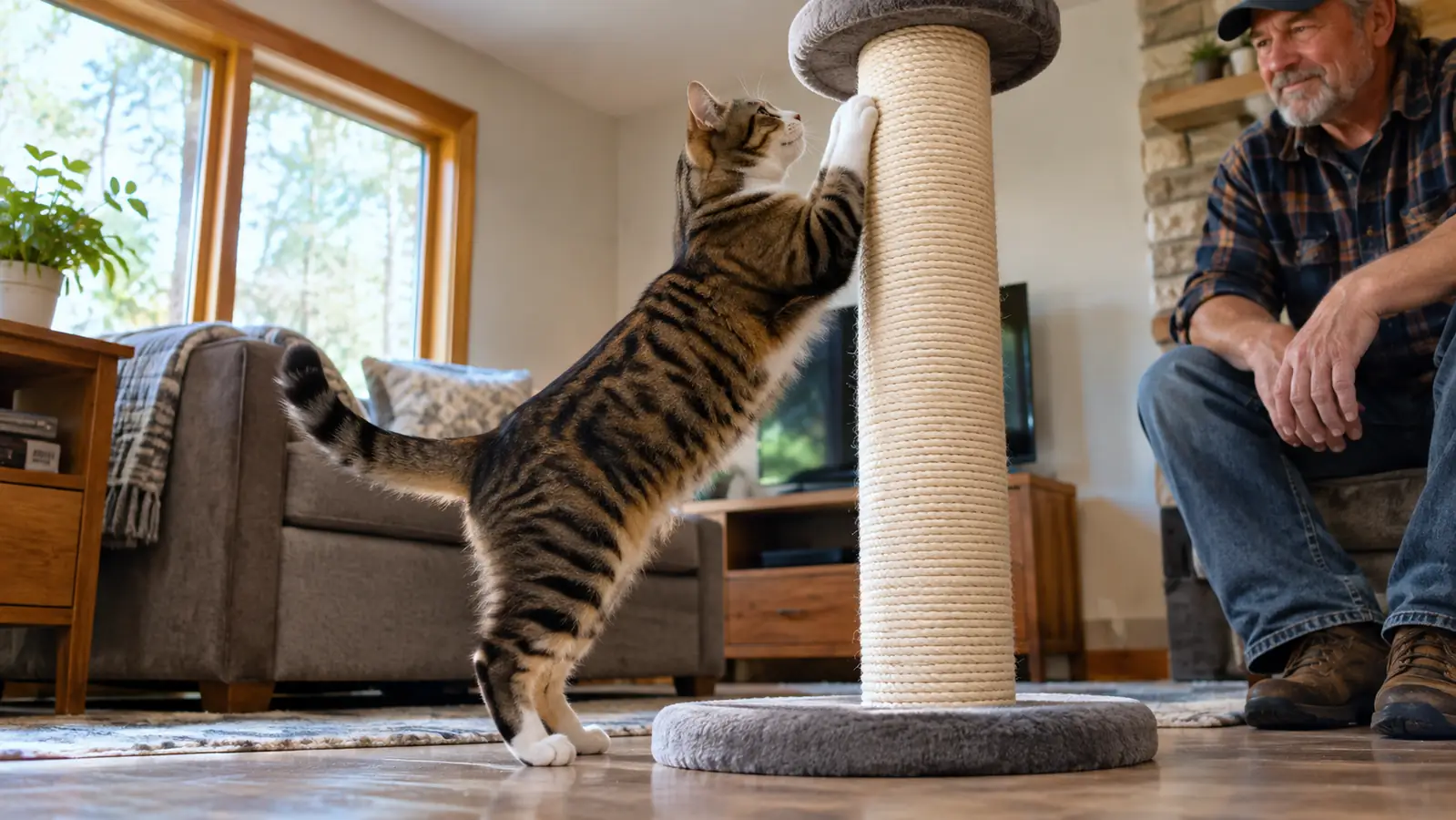
The biggest difference between the two is not the material. It is the height. When a cat scratches, she is doing three things at once: stretching the muscles along her back and shoulders, shedding the dull outer layers of her claws, and leaving scent marks from the glands in her paws. A flat cardboard scratcher lets her do the last two. The SmartCat post, at 32 inches, lets her do all three. That full stretch is not a luxury. It is the whole point. Pepper is a small cat, maybe 9 pounds, and she still needs to reach up as far as her body will go to get it. I watched her dig her front claws into the sisal, arch her back, and pull down with her whole weight. That is the exact motion she used to perform on the back of the sofa.
The other place the post runs away with it is staying power. Cardboard is satisfying because it gives, and that is exactly why it does not last. Pepper went through a medium cardboard scratcher every couple of months, and every time it shredded, the bits ended up across the living room floor. The SmartCat post has taken a full month of daily scratching and still looks nearly new. The sisal is roughed up, which is what it is supposed to look like, but there is no sign of it falling apart. A post that falls over when a cat leans on it is worse than no post at all, and I have tested enough of them to know the difference. For anyone tired of replacing cardboard and vacuuming up the mess, that alone is worth the switch.
Where the Cardboard Scratcher Wins
I am not going to pretend the cardboard side has nothing going for it, because it wins on the two things that matter most when you are not sure what your cat will use. The first is cost to get started. A cardboard scratcher is the cheapest way to find out whether your cat will use a dedicated surface at all, and if she ignores it, you are out very little. The second is texture. Some cats prefer the feel of corrugated cardboard, that softer tear that gives way under the claws. I have known cats who will pick a plain cardboard box over the nicest post, no matter how tall.
There is also the question of style. Cats who scratch flat surfaces, like carpets, doormats, and the floor, are usually looking for a horizontal option. That is more common in older cats, who can find the full stretch of a tall post uncomfortable, and in nervous cats, who feel safer scratching low with their belly close to the ground. If your cat has never touched the backs of furniture and only ever scratches the carpet, a flat cardboard scratcher may genuinely be the better match. That is not a knock on the post. It is just honesty about how cats differ.
Most cats pick the tall post. See why on Amazon.
Pepper chose the SmartCat post over cardboard within a day, and the sofa arm has stayed clean since. It is tall enough for a full stretch, sturdy enough to take years of scratching, and simple enough to fit in any room. Check the current price and read what other cat owners have to say.
Amazon Check Today's Price on Amazon →How I Tested Both at Home
To keep this fair, I ran the test in the room where Pepper already did her scratching, which is the living room. The sofa arm was her favorite target, so I put the SmartCat post right next to that spot. The cardboard scratcher went a few feet away, in the corner by the window where she likes to nap. Both got a light sprinkle of catnip on day one, and nothing after that. I wanted to see what she chose on her own.
The first evening, Pepper walked past the cardboard, sniffed the sisal, and stretched right up to scratch. She used the post every day that week, usually first thing in the morning and again before bed. The cardboard got one brief visit on day three, when I caught her giving it a few lazy swipes. By the end of the month, the cardboard had a handful of claw marks and the post had clearly become her main spot. I checked the sisal for fraying every few days, and after a month it still looked like it had years left. Bailey, my 6-year-old rescue dog, gave the whole experiment a wide berth after Pepper hissed at him once, so this stayed a one-cat test. The sofa arm, which had been her favorite target for two years, has not had a fresh scratch since.
The sofa arm, her favorite target for two years, has not had a fresh scratch since the SmartCat post went up next to it.
What I Learned at the Vet Clinic About Scratching
Years of working at a veterinary clinic taught me that most scratching problems are not behavior problems. They are placement problems. Cats do not scratch to be naughty. They scratch to mark territory, to stretch, and to keep their claws healthy, and if the sofa is the best scratching surface in the room, the sofa is what they will use. Scratching is as natural to a cat as eating or sleeping, and trying to stop it entirely is a losing game. The fix is not discipline, because that never works. The fix is giving the cat a better option in the exact spot where she already scratches.
That is why I think the SmartCat post worked so fast for Pepper. It did not ask her to change her habits. It just showed up in the place she had already chosen and offered her something better than the sofa arm. Taller, rougher, and steadier. The steadiness matters too. A post that wobbles makes a cat nervous, and a nervous cat goes back to the sofa. Cats are creatures of habit, and when you work with the habit instead of against it, they switch surprisingly fast. Pepper was using the post within the first evening, and I did not have to do anything except put it in the right spot.
Why Placement Matters More Than You Think
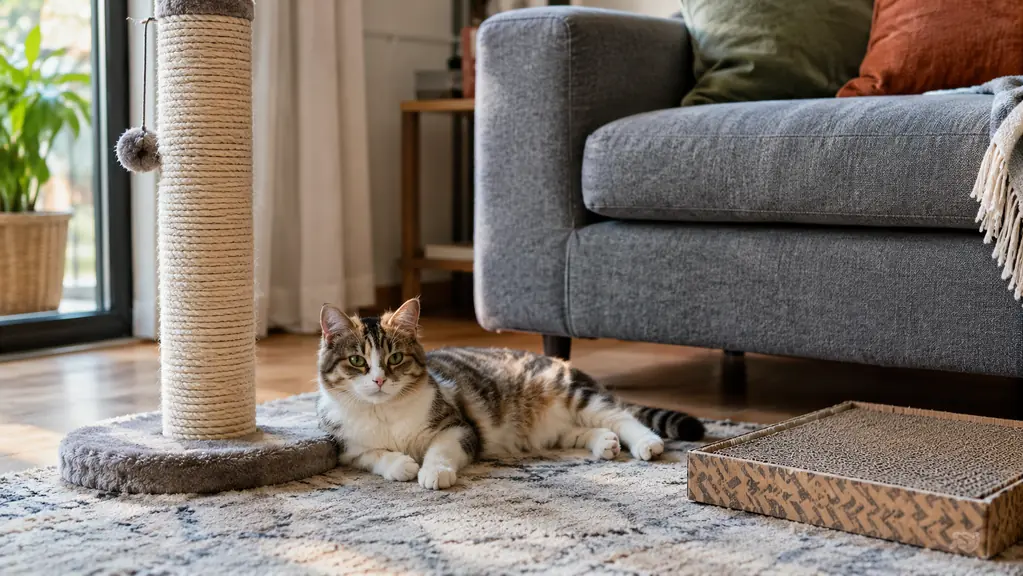
Here is the mistake most people make with a new scratching post. They hide it in a corner or tuck it behind the door, and then they wonder why the cat keeps shredding the couch. I have seen this exact mistake over and over at the clinic. Cats scratch where they spend time, and they scratch where they can see and be seen, because scratching is partly a social signal. A post tucked away might as well not exist. Put it next to the furniture your cat is already damaging, in a spot where she likes to stretch, and leave it there long enough for her to try it.
The other tip that helped with Pepper was leaving the old cardboard scratcher out for a while instead of throwing it away the day the post arrived. Cats can be suspicious of new things, and having both options available meant she could switch on her own schedule. She did, and fast. Once she had clearly chosen the post, I moved the cardboard to the basement, and she has not seemed to miss it. If your cat is slow to switch, try moving the post a few feet in either direction. Sometimes a small change in placement is all it takes.
How to Help a Cat Make the Switch
If you bring home a tall post and your cat ignores it for the first few days, do not panic and do not return it yet. Give her a reason to try it. A fresh sprinkle of catnip on the sisal works for most cats, and a few minutes of play near the post can get her reaching up and digging in without thinking about it. Some cats also respond to praise. When Pepper used the post that first evening, I told her she was a good girl in the same tone I use for Bailey, and she came back to it again an hour later.
You can also make the old target less appealing without being mean about it. A sofa arm covered with a throw blanket, or a piece of double-sided tape along the edge, buys you time while the cat builds the new habit. And keep the post in place for at least two weeks before you judge it. Cats are creatures of routine, and a brand new object in the middle of the living room is a big change. Given a little time and the right placement, most cats will switch. And if you catch her using the post, leave her alone while she does it. Interrupting a cat mid-scratch teaches her to avoid the spot.
Who Should Buy Which
Buy the SmartCat scratching post if your cat scratches the backs of furniture, stretches up against door frames, or seems to want more height than a flat scratcher gives her. That covers most cats, honestly. It is also the better buy if you are tired of replacing cardboard every couple of months, because the sisal holds up for years and the base is wide and heavy enough that the post does not tip when a cat really leans into it. I tested that myself, and Pepper has never once knocked it over.
Stick with a cardboard scratcher if your cat only scratches flat surfaces, if she is older and avoids the full stretch, or if you are testing whether she will use a dedicated scratcher at all and want to start cheap. There is no shame in that. A cardboard scratcher that actually gets used beats a fancy post that sits in the corner, and some cats simply prefer it. If you go the cardboard route, buy one that is sturdy and put it somewhere your cat already scratches. The cheap flimsy ones fall apart in days. The key is to watch where your cat already scratches and match the surface to that spot, not to the one you hope she will choose.
The Bottom Line
After a month of side-by-side testing, I would put it this way. The SmartCat post is the better choice for most cats, because most cats want to stretch tall when they scratch, and the combination of height and sisal gives them exactly what they are looking for. The cardboard scratcher is the better choice for a smaller group, the flat scratchers and the budget shoppers, and it is an honest option for them. Whatever you pick, put it in the right spot and give your cat time to find it. Watch your cat for a day. The surface she already chooses tells you which one to buy.
Give your cat the stretch she is already looking for.
The SmartCat post is tall, sturdy, and built to take years of daily scratching. If your cat is working on the sofa or the chair arms, this is the fix that actually sticks. See today's price and the full customer reviews on Amazon.
Amazon Check Today's Price on Amazon →