
The day I finally admitted defeat, I was standing in the living room staring at the arm of our couch. It wasn't just scratched. It looked like someone had taken a cheese grater to the corner, then fluffed the loose threads into a fuzzy mess that caught the light every time I walked past. Pepper, our nine-year-old indoor cat, sat three feet away looking completely innocent, which is exactly how she looks right after she does something she knows she shouldn't.
I spent seven years at the front desk of a veterinary clinic outside Columbus, so I knew the drill. Cats scratch. It isn't spite and it isn't a behavior problem. It's how they stretch, mark territory, and keep their claws healthy. Knowing that didn't make the couch any less ruined, and it didn't stop the cycle of buying flimsy cardboard scratchers that Pepper ignored in favor of the furniture.

Finally, after the third ruined corner, I ordered the SmartCat Pioneer Pet scratching post. I had seen the same model at the clinic for years, and the office cat used it daily without it ever tipping over. That mattered to me, because whatever we put in the living room had to survive Bailey, our six-year-old rescue who weighs about 45 pounds and moves through the house like he's being chased.
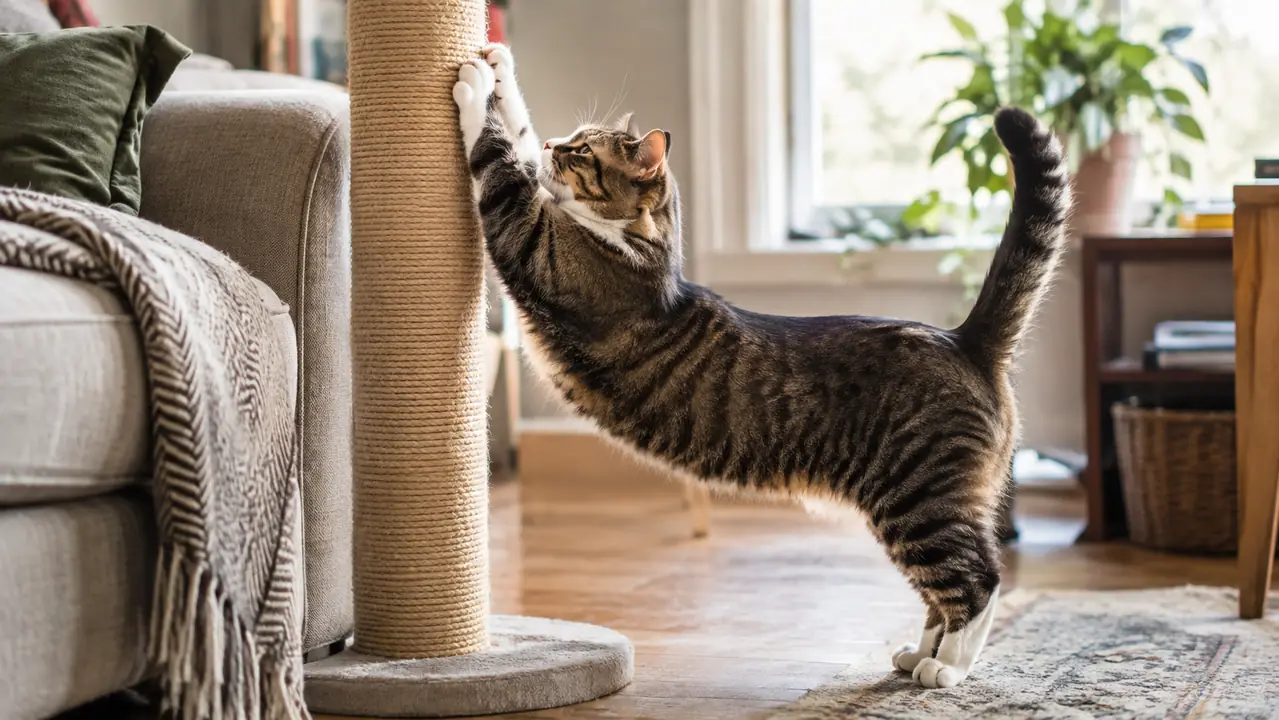
The post arrived in a flat box, and I had it standing in about five minutes. No tools, no fuss. I put it next to the couch corner Pepper had already claimed, figuring I'd give her the choice and hope she picked the right one. She walked over, sniffed the sisal once, and started scratching like it was her job. I stood there waiting for the other shoe to drop. It didn't.
At first I assumed it was a fluke, the novelty of something new in the room. But a few weeks later, the couch corner was still ugly and it wasn't getting any worse. Pepper had moved her scratching to the post almost entirely. She uses the tall part when she first wakes up, stretching up on her back legs the way cats like to do. Then she gives the base a few swipes on her way past, the same way you or I might tap a doorframe walking through a room.
Bailey, true to form, had to investigate the new furniture. He sniffed the base, gave it a puzzled look, and then lay down next to it like it had always been there. The post is solid enough that his 45 pounds of curiosity didn't budge it, which is more than I can say for the cardboard scratchers that used to slide across the floor whenever Pepper put a paw on them.
She walked over, sniffed the sisal once, and started scratching like it was her job. I stood there waiting for the other shoe to drop. It didn't.
The post that finally beat our couch problem
If you're tired of patching couch corners and sweeping up cardboard confetti, this is the post that ended it for us. It holds a 4.7-star average across more than 34,000 Amazon reviews, and after months of daily use in our house, I can tell you why.
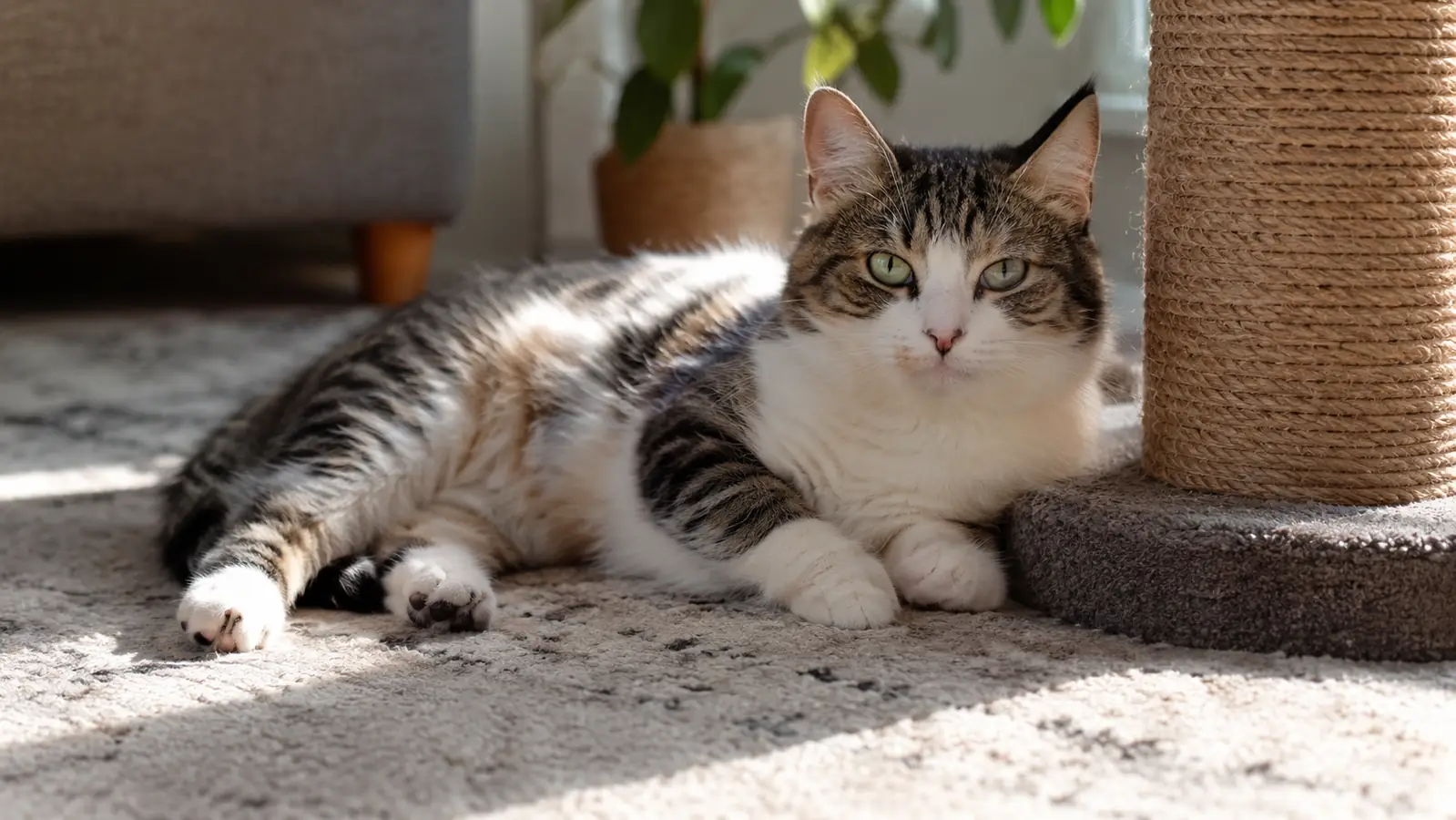
Amazon Check Today's Price on Amazon →Here's the part I didn't expect. The post didn't just save what was left of the couch. It changed where Pepper spends her day. She naps on the carpet by the base. She digs her claws into the sisal when she's bored. And she stopped treating the furniture like her personal gym. The whole thing is tall enough that she can stretch out full length without hunching, and the base is wide enough that it doesn't wobble when she really gets into it.
I'd also tell you to ignore the people who say a cat won't use a scratching post if you buy one. That was never our experience. What I learned at the clinic, and what this post confirmed at home, is that placement matters more than almost anything else. A cat scratches where she already wants to scratch. Put the post there, and she'll use it. Put it in a corner of the basement where nobody goes, and she'll find the couch again.
The other thing I learned is that you don't need to replace these things every few months. The sisal on our SmartCat post has held up through a full season of daily scratching, and it still has plenty of life left. I know this sounds like a small thing, but when you've already thrown away four cardboard scratchers in one year, a post that lasts feels like a win.
Pepper is nine, which means she's set in her ways. I half expected her to treat the new post like she treats every new bed I buy her, which is to say she ignores it for a month and then decides it's acceptable. That's not what happened. She claimed it the first day, and she's used it every day since. If a nine-year-old cat with strong opinions can switch, yours probably can too.
I'm not going to tell you the couch looks new, because it doesn't. The damage was done before the post arrived, and no scratching post can rewind time. But the important part is that the damage stopped. We haven't had a new scratch on the furniture in months, and that's a sentence I never thought I'd write.
What I'd Tell You If We Were Sitting at My Kitchen Table
If you're reading this because your couch looks like mine did, here's the honest version. A scratching post only works if your cat actually uses it, and that means putting it where the cat already wants to scratch, not where you want it to look nice. Put it next to the couch corner, the chair arm, wherever the damage is happening, and give it a few weeks. Don't expect perfection overnight. Pepper still takes a swipe at the couch every now and then, usually when she's annoyed with me for being late with dinner. But it's a swipe, not a demolition. That's the difference between living with a cat and living in a war zone. The SmartCat post is the one thing that actually worked in our house, and after years of trying everything else, that's worth a lot.
Give your furniture a fighting chance
The SmartCat scratching post is the one thing that actually ended our couch problem. Check today's price on Amazon and read the reviews from other cat owners who made the same switch.
Amazon Check Today's Price on Amazon →