
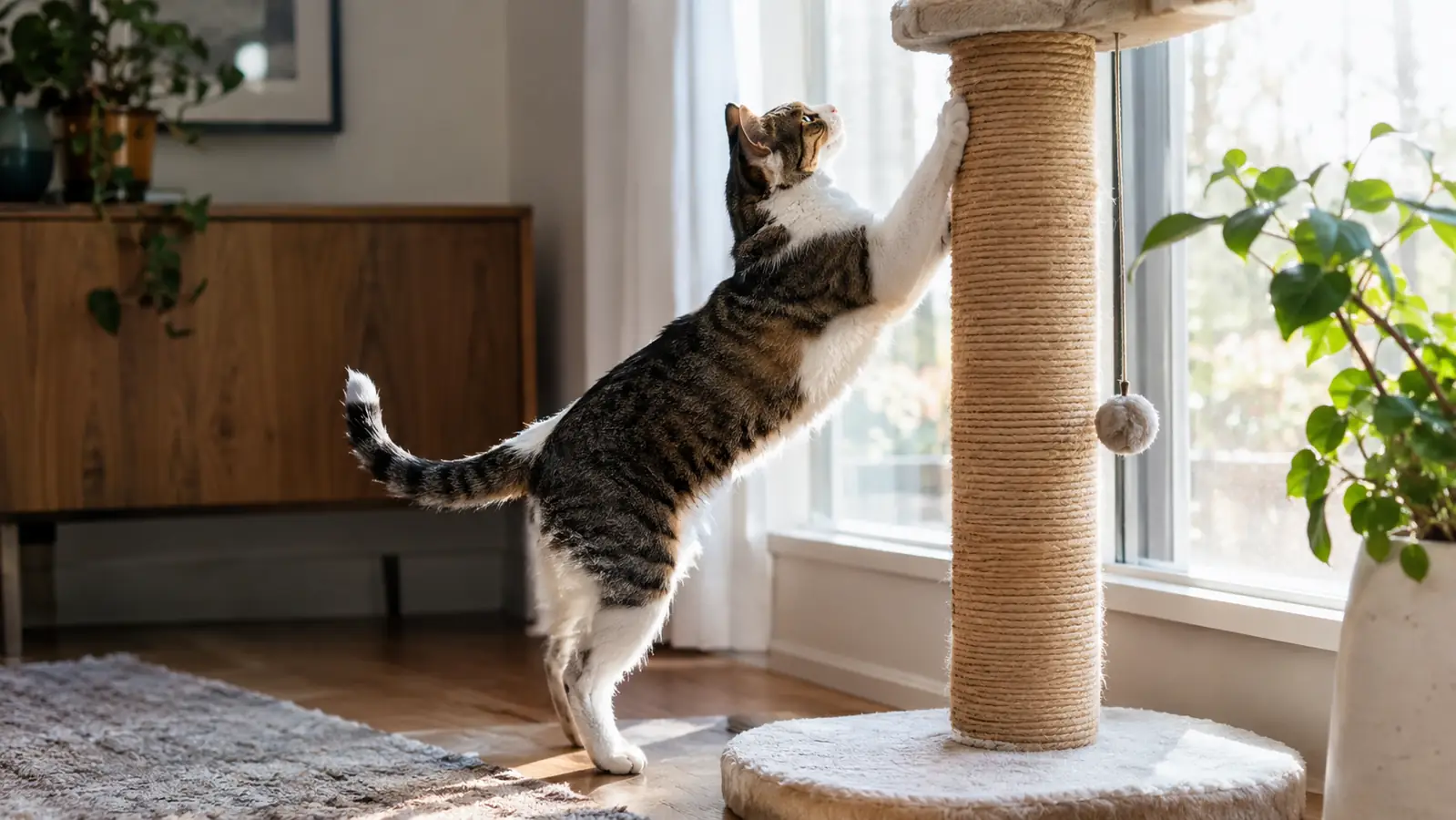
I'll be honest about how this review started. I bought the SmartCat scratching post for Pepper after finding her claw marks on the arm of our living room couch for the third time in a month. I had already tried a cardboard scratcher that she ignored, a small carpeted post that tipped over, and a lot of wishful thinking. What I needed was something tall enough for a nine year old indoor cat to stretch into, sturdy enough to survive a 45 pound rescue dog walking past it, and simple enough that I would actually keep using it. The SmartCat post checked those boxes on paper. Here is what happened after six months of real use.
The short version is that the post has done its job, but not in the way I expected. It did not instantly stop Pepper from scratching. It gave her a better place to scratch, and over time she chose it. That difference matters, because a lot of reviews make it sound like the cat will switch the moment the box arrives. In our house, the switch took about a week, and the reason it happened had less to do with the post and more with where I put it and how I introduced it. If you are reading this because your couch already has a bare spot, that is the part worth understanding.
The Quick Verdict
A tall, sturdy post that earns its place if you set it up in the right spot. Not magic, but it saved our couch once Pepper gave it a fair chance.
Amazon Check Today's Price →If your couch has claw marks, start here.
The SmartCat post is the one I would replace tomorrow if ours disappeared. It gives Pepper a full stretch, holds up to daily use, and has survived six months without tipping. See today's price and current reviews on Amazon before you decide.
Amazon Check Today's Price on Amazon →How I've Used It
Pepper is nine years old, short haired, and particular about almost everything. She has specific spots for sleeping, a specific bowl for food, and a very specific opinion about anyone who moves her blanket. So I did not expect her to love a new scratching post overnight. I set it up in the corner of the living room, about three feet from the couch she had already claimed. I put a little catnip on the base and on the wrapped surface. Then I waited. The waiting is the part that most reviews skip.
For the first two days, Pepper sniffed it and walked away. Bailey, our six year old mixed breed rescue, was more interested than Pepper was, which was not helpful. On day three, I caught Pepper using the post with her front claws, a halfhearted scratch. By the end of the week, she was using it every morning, usually right after breakfast. That is the part nobody tells you. The post works, but it works on cat time. You have to give the cat a chance to decide it is hers.
Bailey, for the record, has never scratched the post. He is a dog, and he mostly ignores it. But he has bumped into it, leaned on it, and once ran past it at full speed chasing a squirrel outside. The post did not tip. That sturdiness is the reason I kept it instead of sending it back. It also means I do not worry when Pepper jumps off the top, which she does more often than I expected.
The First Thing Nobody Tells You
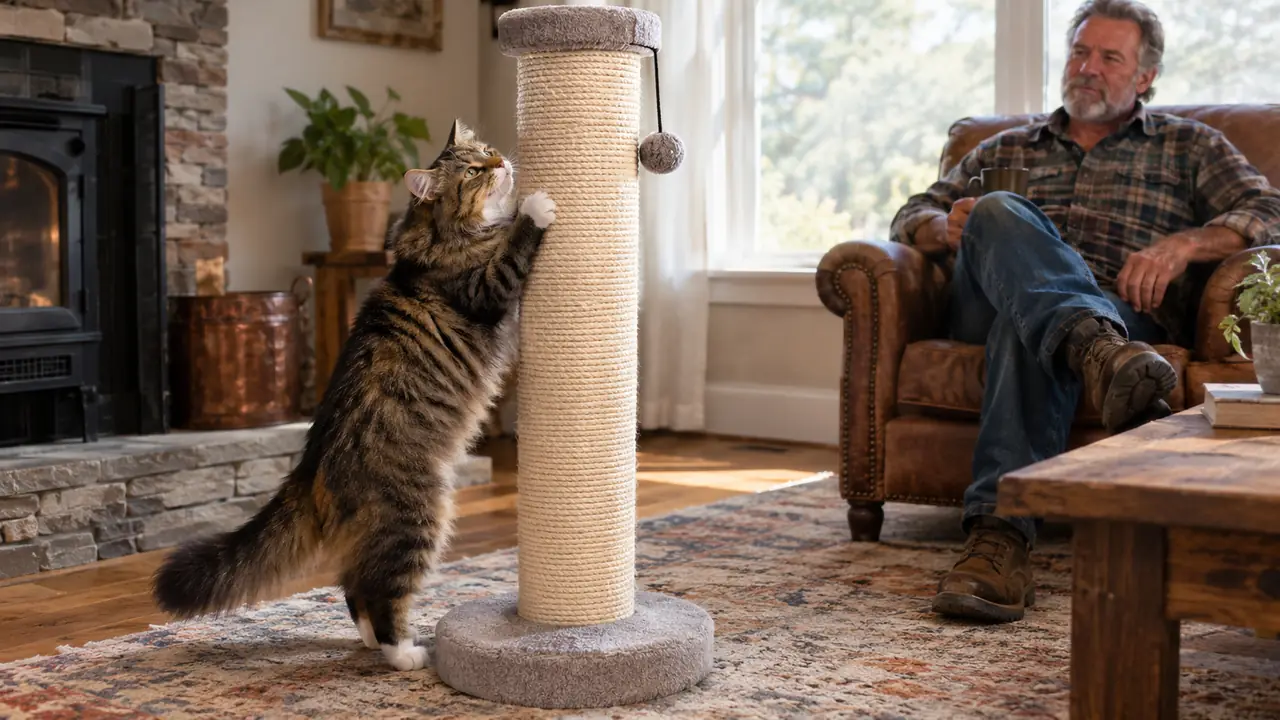
Nobody tells you that a tall scratching post is as much about placement as it is about the post itself. The SmartCat post is roughly as tall as a small table, and it needs to go somewhere the cat already likes to be. If you tuck it into a dark corner behind the door, your cat will keep using the couch. Cats scratch to mark territory, stretch their backs, and sharpen claws, and they want to do all of that in the rooms where they spend time. A post in the wrong spot is a post that looks nice and does nothing.
I moved our post three times before Pepper settled into a routine. It ended up near the window, where she can watch birds while she scratches. That was the change that made the difference. If you buy this post and your cat ignores it for a week, move it before you give up on it. That advice cost me a lot of trial and error, and it is the single most useful thing I can tell another cat owner. Put the post where the cat already wants to be, not where you want the post to live.
Why Height Matters More Than You Think
The reason I chose a tall post instead of another cardboard scratcher is the stretch. Cats scratch partly to stretch the muscles along their back and shoulders. A short scratcher lets them reach forward, but it does not give them the same full body extension. Pepper is a normal sized indoor cat, and she uses the full height of the SmartCat post. She rises up on her back legs, digs in, and pulls down. That motion is exactly what she was doing to the couch, just in a place I can live with. Watching her use it, I finally understood why the tall design matters.
Tall also means visible. Pepper seems to scratch more when the post is out in the open, probably because scratching is also a way of leaving a mark that other animals can see. Even though she is the only cat in the house, she still acts like she is advertising something. The post being tall and out in the open gives her that feeling, and it keeps her away from the furniture. If your cat is scratching the back of the couch, height gives them a better target for that same motion.
What the Build Quality Is Really Like
The base is solid and heavy enough that I have never worried about it tipping during normal use. The wrapped surface is thick, and after six months it shows wear in the spots Pepper uses most, but it has not shredded through or started shedding fibers all over the rug. The whole thing is easy to wipe down, which matters because Pepper occasionally leaves hair on it and Bailey likes to sniff it. It has also survived Bailey leaning against it while he watches the window.
Assembly took me about ten minutes. I am not handy, and I did it alone while Bailey supervised from the kitchen. The instructions were clear, and I did not need any extra tools. The post feels like a piece of furniture rather than a toy, which is a good thing in a small house where every corner already has something in it. It is not the kind of thing you put together once and then worry about falling apart.
What I Liked
- Tall enough for a full stretch, which is what keeps Pepper off the couch
- Base is heavy and stable; Bailey has leaned on it and run past it without tipping it
- Wrapped surface has held up for six months without shredding through
- Plain design that blends into a living room instead of looking like a toy
- Easy to wipe down and quick to tighten when the top works loose
Where It Falls Short
- Takes up real floor space and needs a spot where you are willing to leave it
- Costs more up front than a cardboard scratcher, and a cat set on horizontal scratching may ignore it
- The wrapped surface shows fuzzy wear in the spots your cat uses most
Six months in, the same post that saved my couch is still the first thing Pepper hits in the morning. I cannot say that about any other scratcher we have tried.
The Honest Downsides
I would not be honest if I said this post is perfect. The first downside is the size. It takes up real floor space, and it is not something you can hide when guests come over. In our living room it works because we placed it near the window and it looks intentional. In a smaller room, it might feel like it is in the way. Measure your space before you order, and think about where the post will live before the box arrives.
The second downside is the price compared to a cardboard scratcher. You can buy a cheap cardboard scratcher for very little, and some cats are perfectly happy with that. The SmartCat post is more expensive up front, and it only makes sense if your cat actually uses it. If your cat refuses to scratch a vertical surface, this post will not change that. It is not a training tool. It is a better target for a behavior your cat already has.
The third downside is the way wear shows. The wrapped surface is not going to look brand new forever. After a few months, the spots Pepper uses most start to look fuzzy. That is normal, and it does not affect how well the post works, but it surprised me because the product photos make everything look pristine. If you want something that will look perfect forever, no scratching post will do that.
How It Compares to Cardboard Scratchers
We have owned more cardboard scratchers than I can count. They are cheap, easy to replace, and some cats love the texture. But they wear out fast, they leave bits of cardboard everywhere, and most of the ones we tried were too low for Pepper to get a good stretch. The SmartCat post costs more up front, but it has lasted far longer than any cardboard scratcher we have bought. Over six months, we would have replaced a cardboard scratcher at least three or four times. We have not replaced this post.
That does not mean cardboard is bad. If your cat is happy with a flat cardboard pad and uses it consistently, you do not need a tall post. But if your cat is scratching furniture, especially the arms or back of a couch, a tall post gives them a more natural substitute. That is the situation this post was built for. It is not about which product is better in general. It is about which product matches the way your cat scratches.

Does It Really Stop Furniture Scratching?
This is the question I see most often, so let me answer it directly. The post did not stop Pepper from scratching the couch completely, but it did stop the damage. She still walks over to the couch and sniffs the arm, and a few times a month she still gives it a quick scratch. The difference is that she spends most of her scratching energy on the post. The bare spot on the couch has not gotten bigger since the post went up.
I think that is a realistic goal. A scratching post does not erase the instinct to scratch. It gives the cat a place to do it that you can live with. If you expect a post to turn your cat into an animal that never scratches anything again, you will be disappointed. If you want your furniture to survive, a tall post is the best tool I have found.
What I Wish I Knew Before Buying
The first thing I wish I knew is that the post would need a settling in period. I almost sent it back after two days because Pepper ignored it. Now I tell people to give it at least two weeks before making a judgment. Cats are creatures of habit, and a new object in the living room takes time to become part of their routine. The catnip helped, but time helped more.
The second thing I wish I knew is that the post is more of a commitment than a cardboard scratcher. You cannot just throw it away after a month. That is a good thing, but it means you need to choose a spot that works for the long term. Once Pepper started using it, I did not want to move it again. We planned around it, and that made all the difference.
Maintenance and Cleaning
Keeping the post clean is easier than I expected. I wipe the base with a damp cloth about once a week, mostly to keep Bailey hair and dust from building up. The wrapped surface does not need much attention. When Pepper sheds, I run a lint roller over the post and it picks up the hair quickly. I have not had to replace any part of it in six months.
The only maintenance I did was tightening the top piece once. It had worked slightly loose after Pepper jumped off the top a few times. That took about thirty seconds with my hands, and it has stayed tight since. If you are not comfortable with a little upkeep, this post still is not demanding. It is just not completely hands off.
The Role of Routine
The longer we have had the post, the more I notice that Pepper uses it at the same times every day. She scratches in the morning after breakfast, again in the afternoon when she watches the birds, and sometimes right before bed. That routine did not exist in the first week. It developed because the post was always available in the same place. Cats like predictability, and the post gives them that.
If you have a cat that scratches at night and wakes you up, a tall post near your bedroom door might help redirect that energy. Pepper still has her moments, but the post catches most of the scratching that used to happen on the couch. It is not a cure for every cat behavior, but it has made our house calmer.
Who This Is For
This post is for cat owners who have already tried a cheap scratcher and watched the cat ignore it. It is for people with an indoor cat who needs to scratch, a couch that is already showing wear, and enough floor space to give the post a permanent home. It is also for anyone who wants a scratching post that does not look like it belongs in a litter box. The design is plain and neutral, which means it blends into a normal living room. If that sounds like your house, this post is worth trying.
Who Should Skip It
Skip this post if your cat only scratches flat surfaces. Some cats simply prefer horizontal scratching, and no amount of height will change that. Skip it if you are looking for a cheap temporary solution, because there are plenty of cheaper options that work fine for a cat who is not destroying furniture. And skip it if you do not have a spot where the post can live out in the open. A post shoved behind a door is a post your cat will ignore. There is nothing wrong with admitting that a tall post is not right for your home.
The bottom line after six months
Pepper still scratches the couch occasionally, but the damage has stopped. The SmartCat post gave her a better place to do what cats do, and it has held up better than anything else we have tried. If your cat is using the furniture, this is the one to start with. Check the current price and reviews on Amazon while it is on your mind.
Amazon Check Today's Price on Amazon →